Kwaabuette School of African Music and Dance
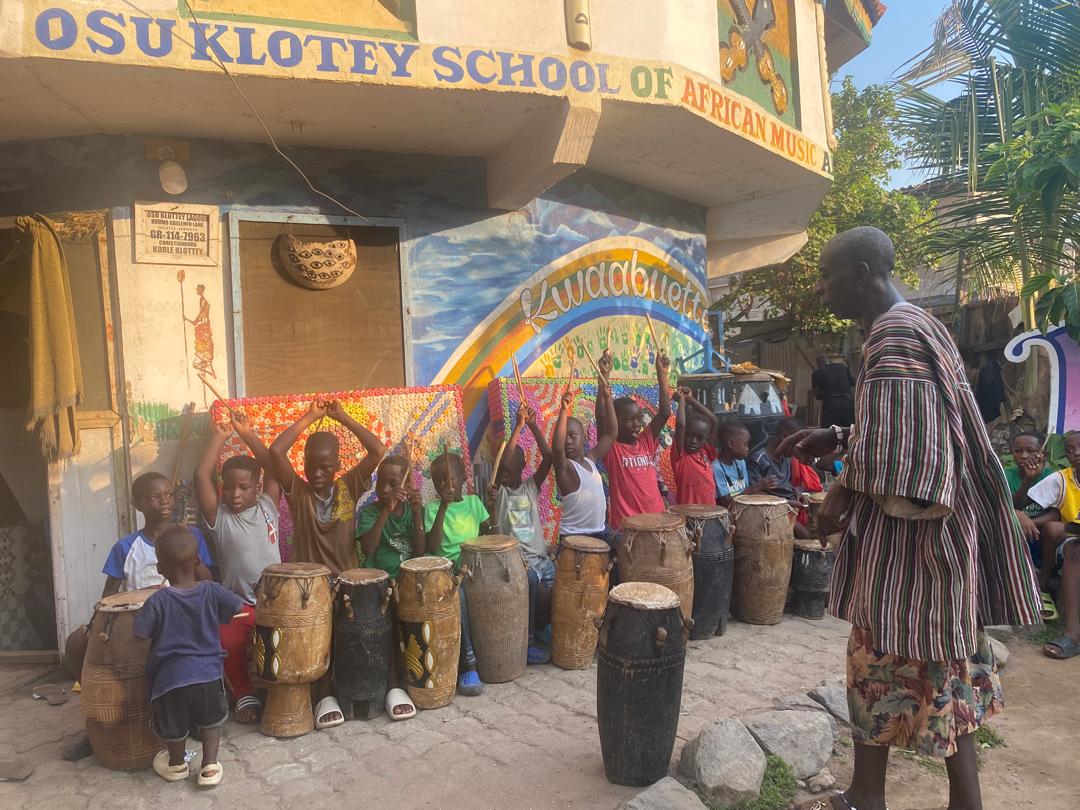
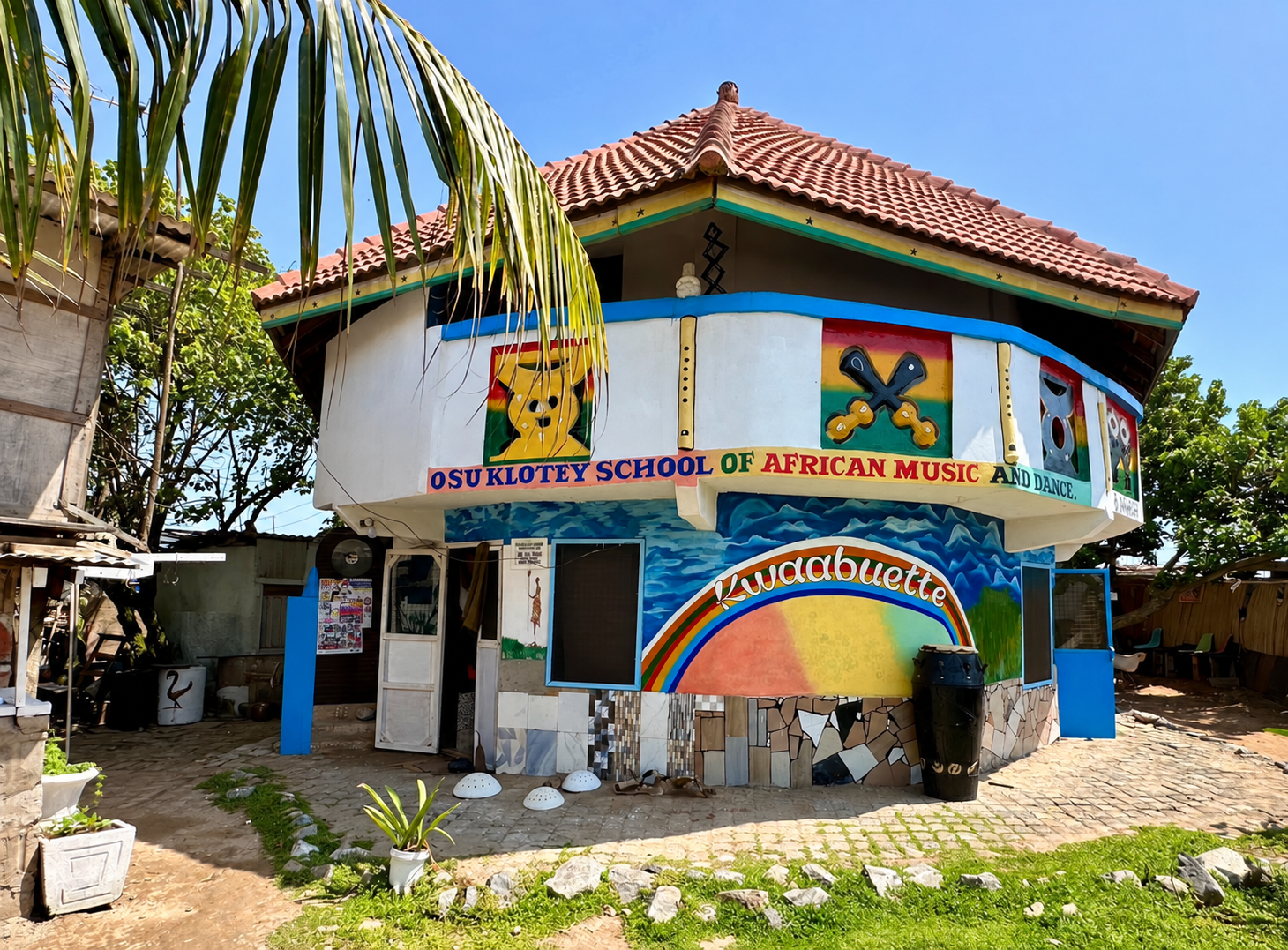
The Kwaabuette School of African Music and Dance is located in the heart of Accra, in the Osu neighbourhood, right beside the Osu Klottey Lagoon and just a few steps from the Atlantic coast. Since 1997, it has been a special place for traditional music and dance, and an established meeting point for children and young people from the local community, musicians, and people from Ghana and many other countries.
The founder, director and still the heart of Kwaabuette is Nii Adjarh Torto. Long before the school was established, he was already active as a musician, dancer and teacher. In the 1980s, he founded the Kwaabuette Cultural Troupe, performing, developing and passing on traditional Ghanaian music and dance to younger generations.
The name Kwaabuette means “rainbow”. Just as a rainbow brings together different colours, Kwaabuette aims to bring together people from different backgrounds and cultures. This idea continues to shape Kwaabuette today: preserving and passing on traditions, learning from one another and remaining open to new ideas and encounters.
Passing on traditions and creating something new
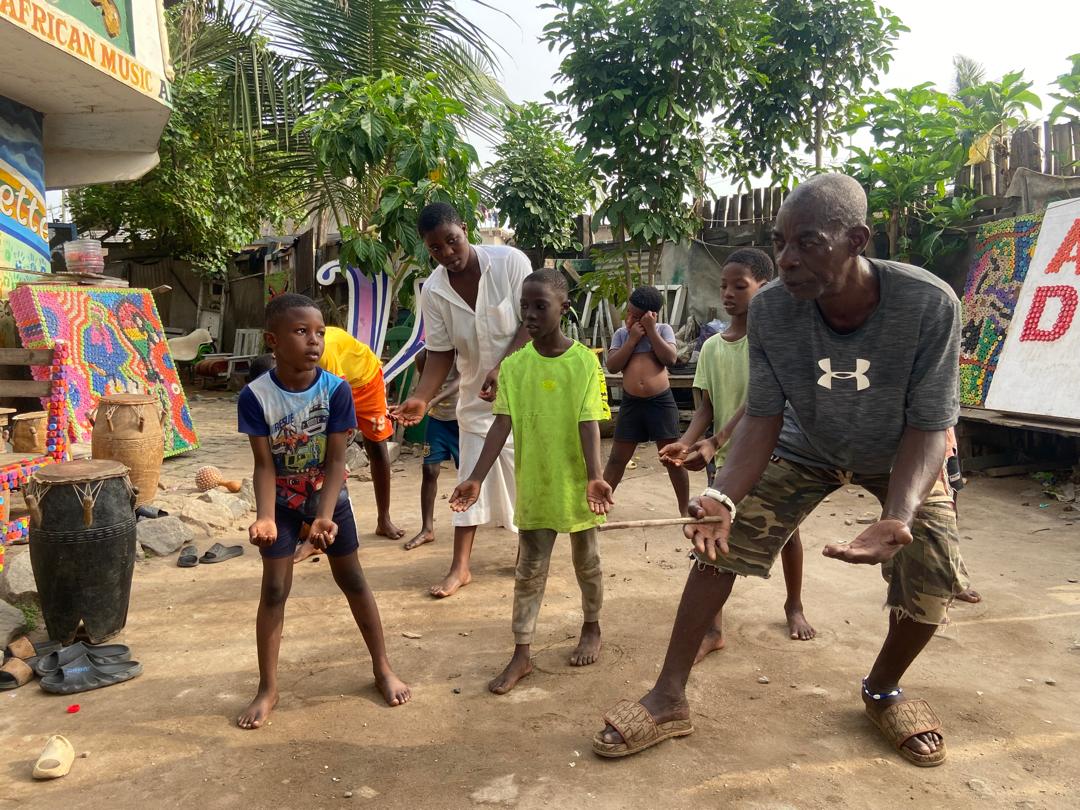
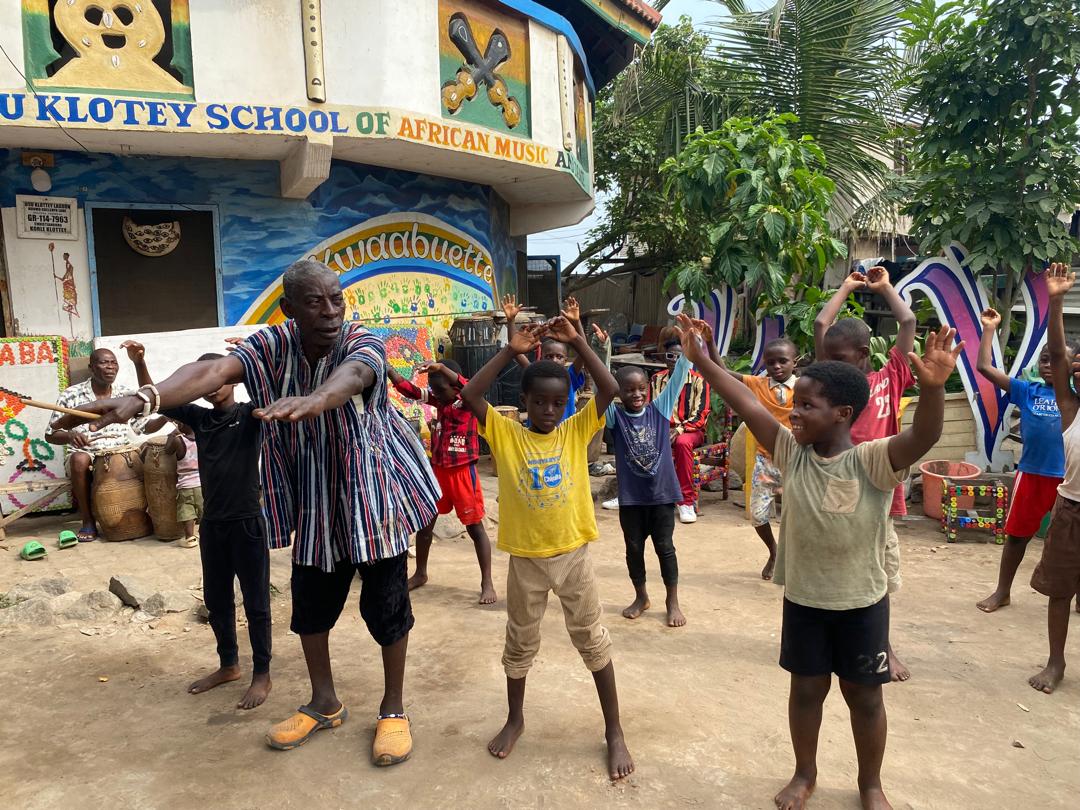
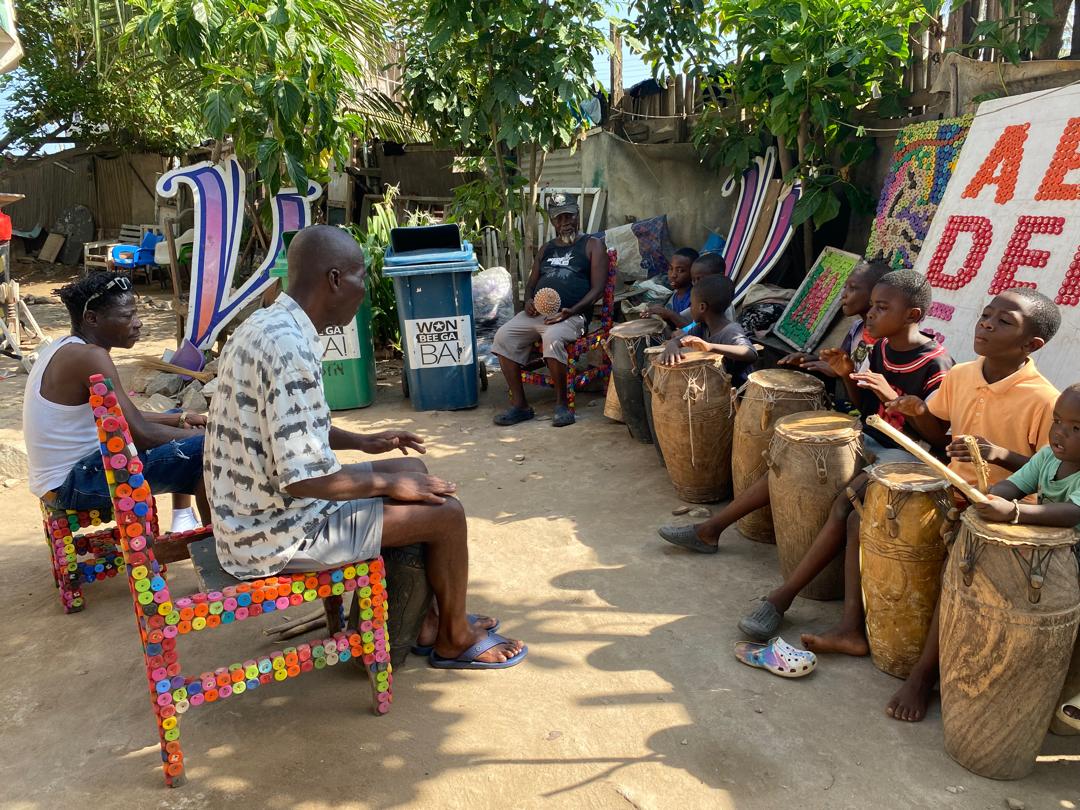
At Kwaabuette, music is not seen as something fixed or unchanging. Children and young people learn traditional rhythms, dances and songs from Ghana and other parts of West Africa – while also being encouraged to develop their own choreographies and new forms of expression.
Drumming, percussion, singing, clapping, movement and dance all belong together. Kpanlogo, a music and dance tradition of the Ga people from Greater Accra, has a particularly important place. Other Ga and Ewe traditions are also taught, alongside musical influences from other regions of Ghana and West Africa.
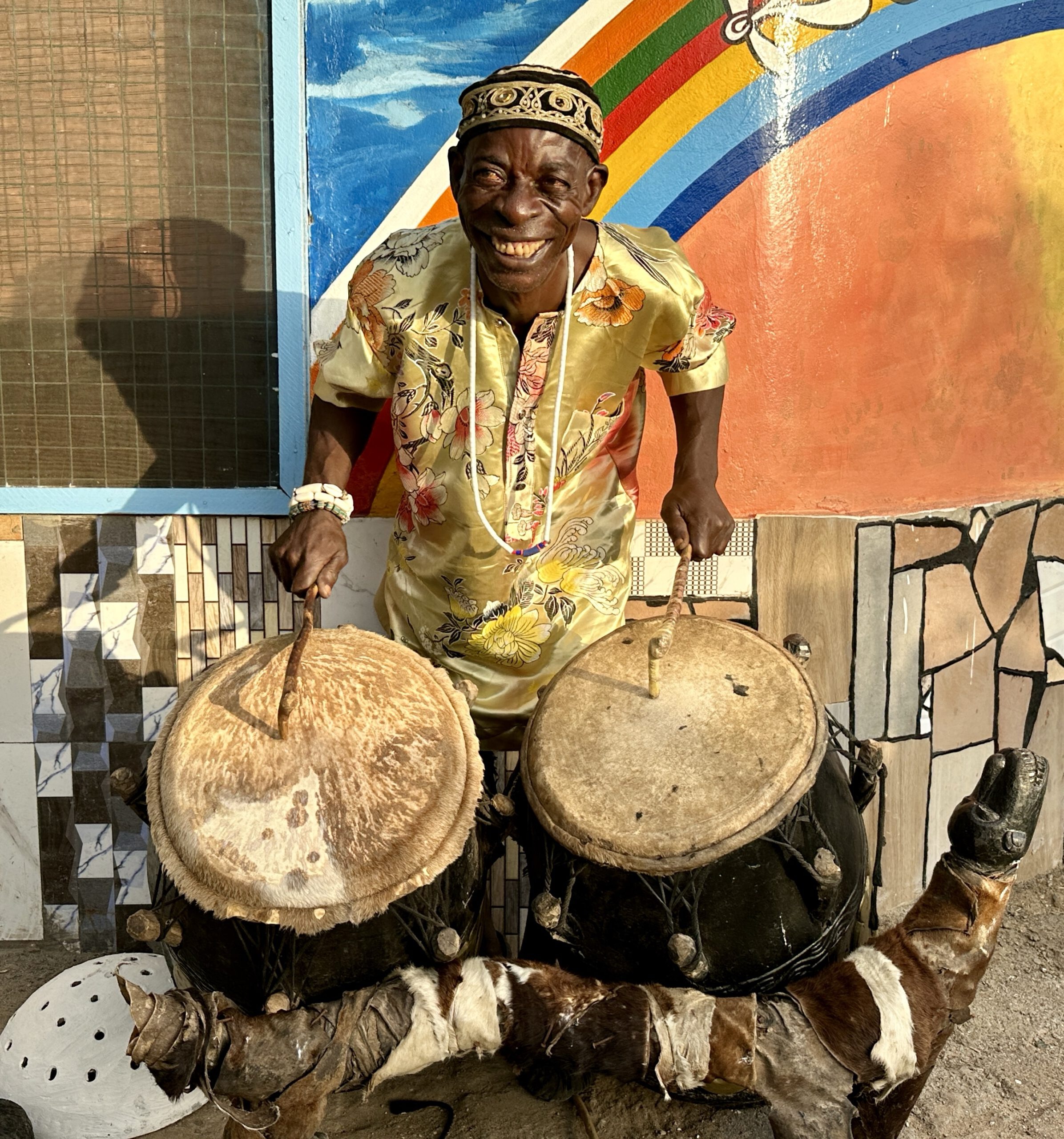
The instruments include Kpanlogo drums and other traditional Ghanaian drums, bass drums, talking drums, djembe, bells, rattles, xylophone and other percussion instruments. Depending on the instrument, the drums are played either with the hands or with sticks
Nii Adjarh Torto – musician, dancer and teacher
Nii Adjarh Torto, vielen auch unter seinem Spitznamen „Senegal“ bekannt, ist Gründer und Leiter von Kwaabuette. Er wuchs in Osu in einer Familie auf, in der traditionelle Musik, Tanz, Rituale und kulturelles Wissen zum Alltag gehörten. Seine Großmutter war traditionelle Priesterin der Osu Klottey Lagune, direkt am Meer.
Nii Adjarh is a drummer, dancer and teacher. During his travels through West Africa, he deepened his musical knowledge. He spent an extended period in Senegal, where he immersed himself in djembe playing and the music of the region – which is also where his nickname comes from.
For decades, he has taught children, young people and adults in Ghana and Europe. An important part of his work has always been music and dance education for children and people with intellectual disabilities. As early as the 1990s, he was involved with the Special Olympics and worked with schools and educational institutions.
His knowledge extends far beyond individual drum rhythms. Traditional songs, dances and rhythms tell stories and accompany important events in the life of a community. Ritual and spiritual music, as well as the language of the drums, are also part of the knowledge that has been passed down through generations.
With the Kwaabuette Cultural Troupe, Nii Adjarh has performed in Ghana and internationally. At the same time, passing this knowledge on to children and young people has always remained a central part of his work.
From the early years to a long-standing partnership with Ankwa-Roots e.V.
After many years of musical work with the Kwaabuette Cultural Troupe, the Kwaabuette School of African Music and Dance was established in 1997 at the Osu Klottey Lagoon. The creation of a permanent place for music, dance and work with children and young people was initially made possible with the support of two families from the USA.
From 1998, Claas Wiechmann from Germany initially supported the school privately. His personal connection with Nii Adjarh Torto developed over many years into a close friendship and an ongoing collaboration.
With the establishment of Ankwa Roots e.V. in 2007, of which Claas Wiechmann was one of the founders, this long-standing support was given an organisational framework. Since then, Ankwa Roots has particularly supported music and dance classes for children and young people and is today Kwaabuette’s main funding partner.
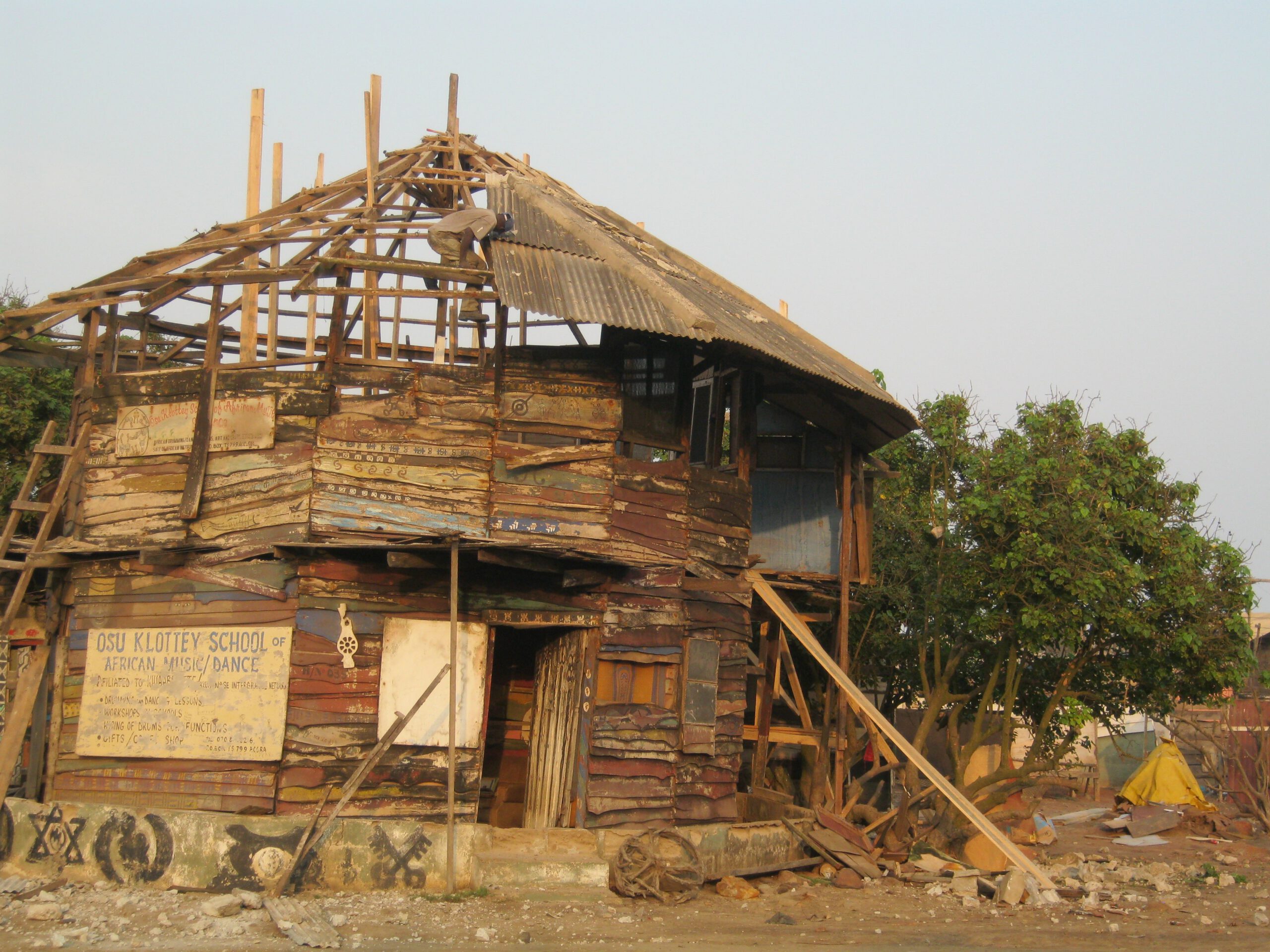
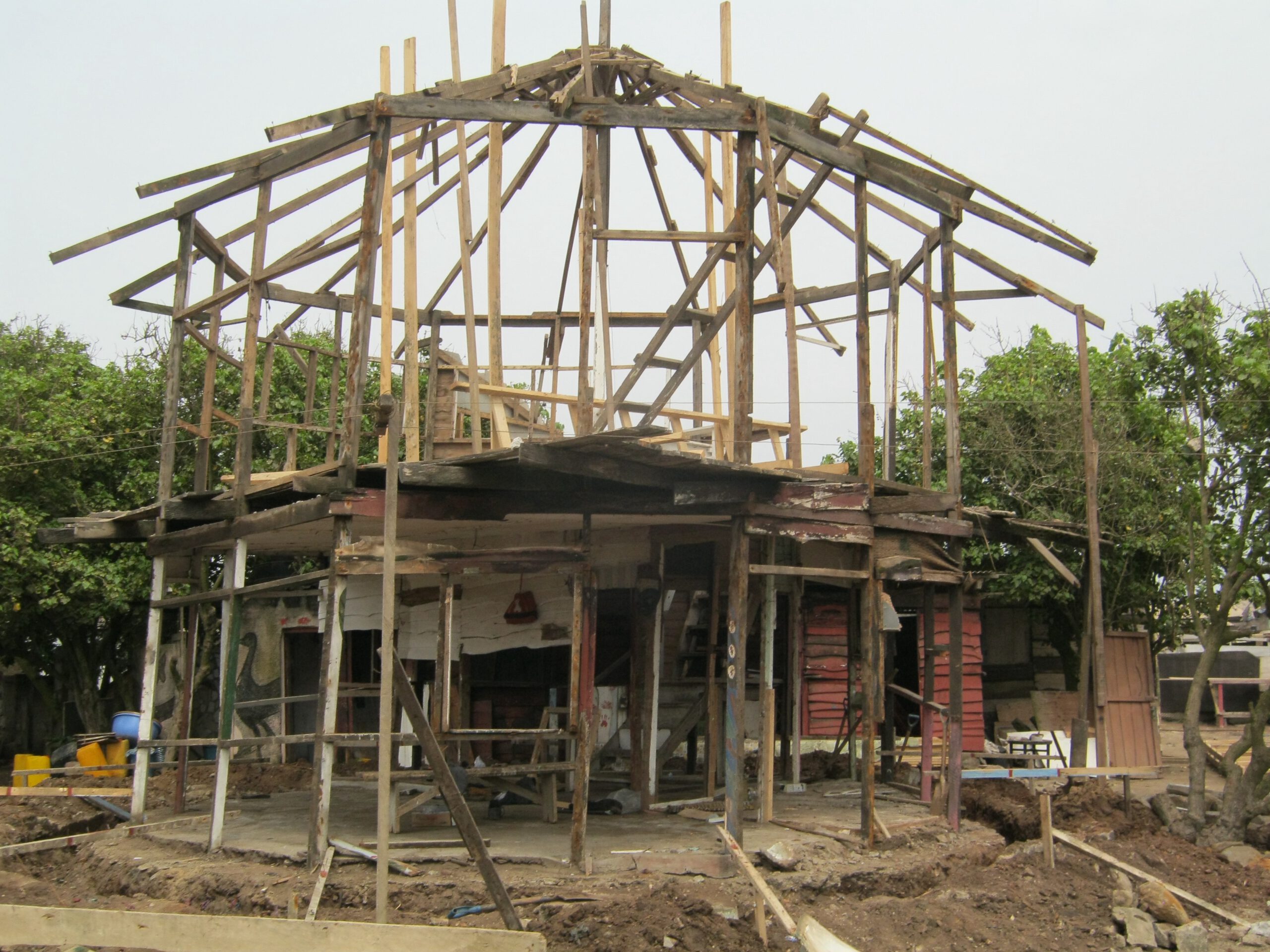
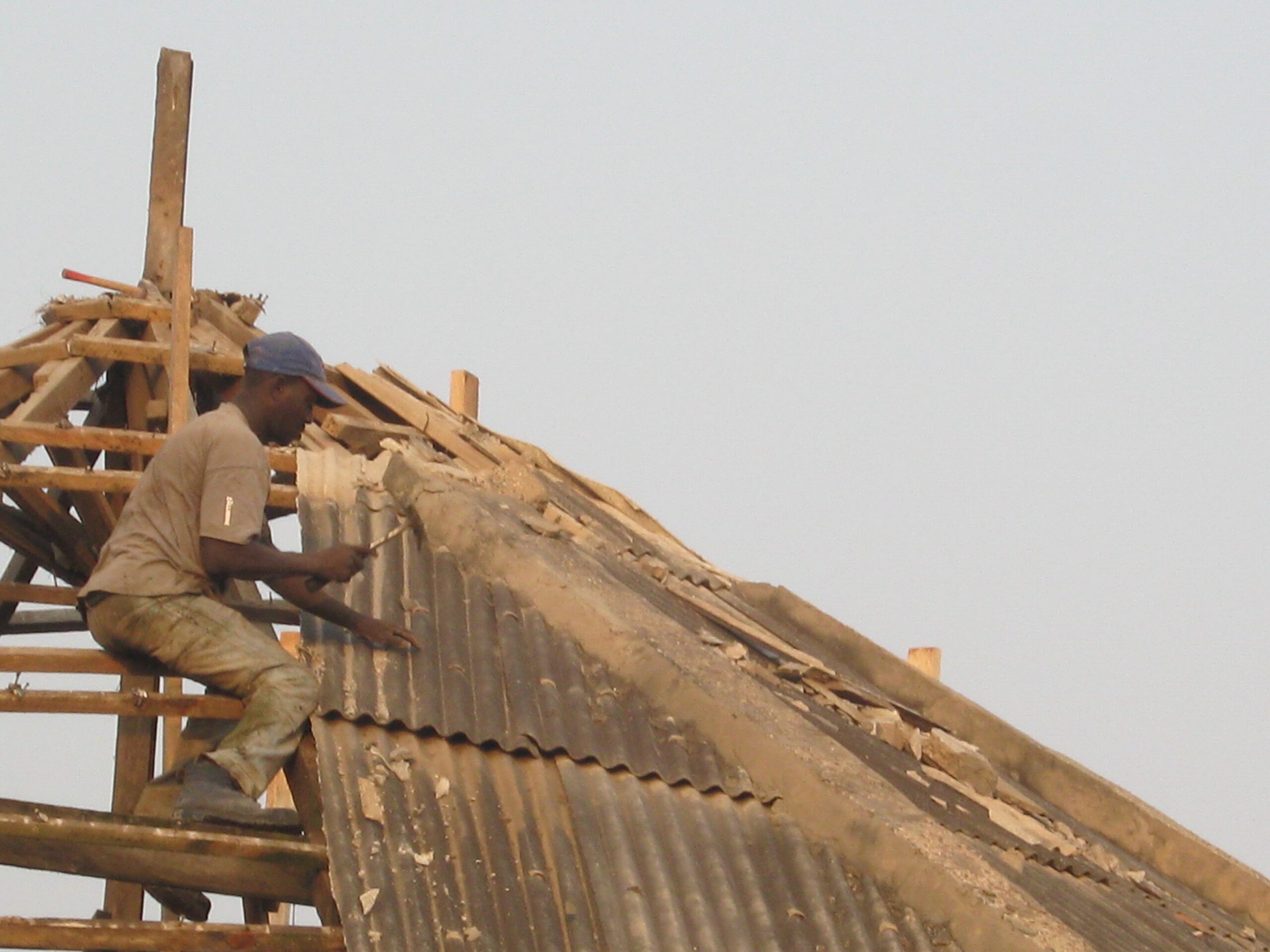
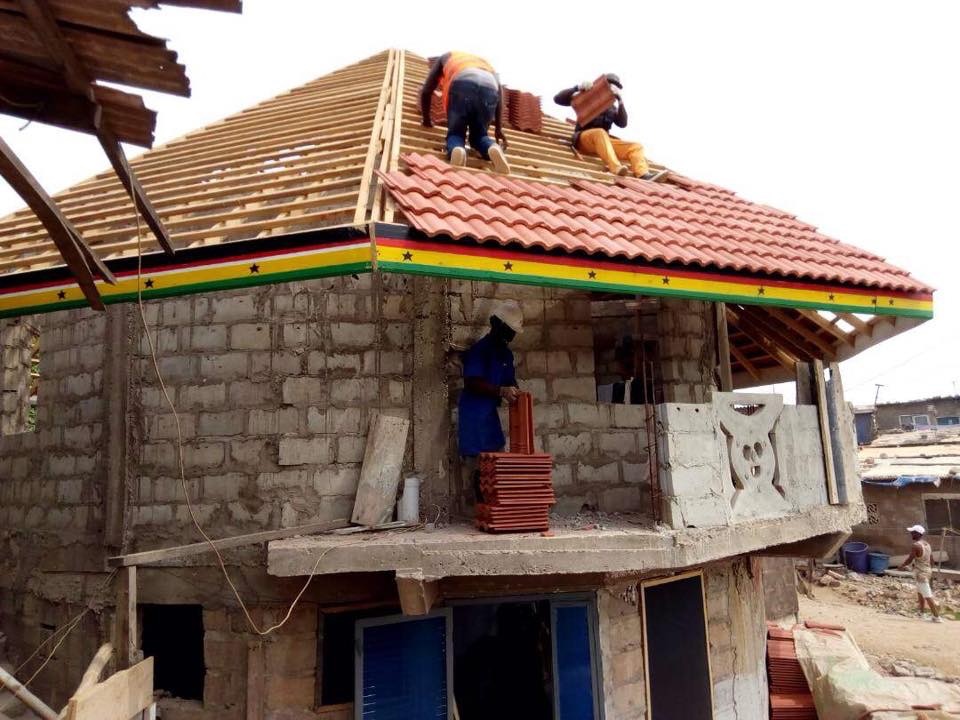
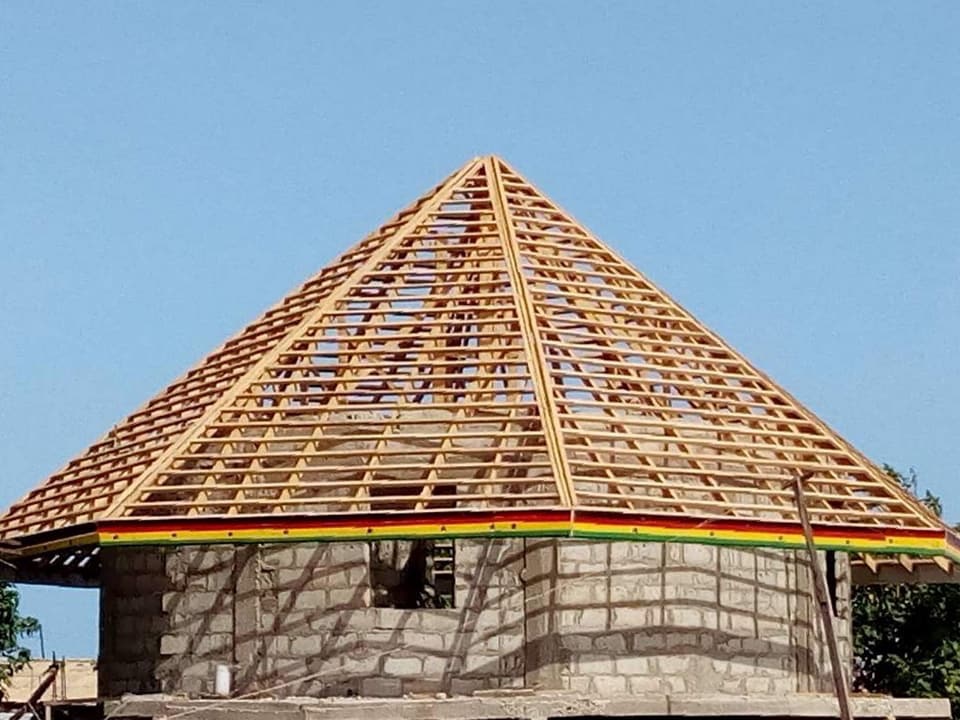
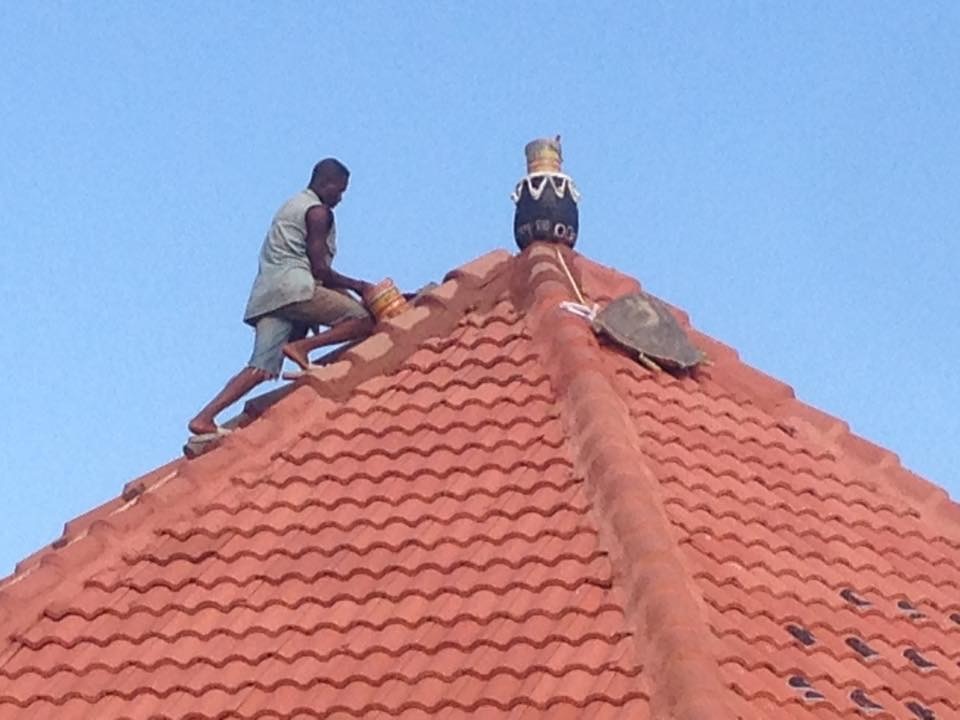
After many years in the humid and salty environment of the lagoon, the original wooden building had become badly damaged and was eventually in danger of collapsing. In 2014, the complete reconstruction of the school began. The old building was carefully dismantled and rebuilt on a stable foundation. The reconstruction was financed mainly through donations and support from Ankwa Roots, while many local people contributed a great deal of their own time and effort to the work. The reconstruction was completed in 2019.



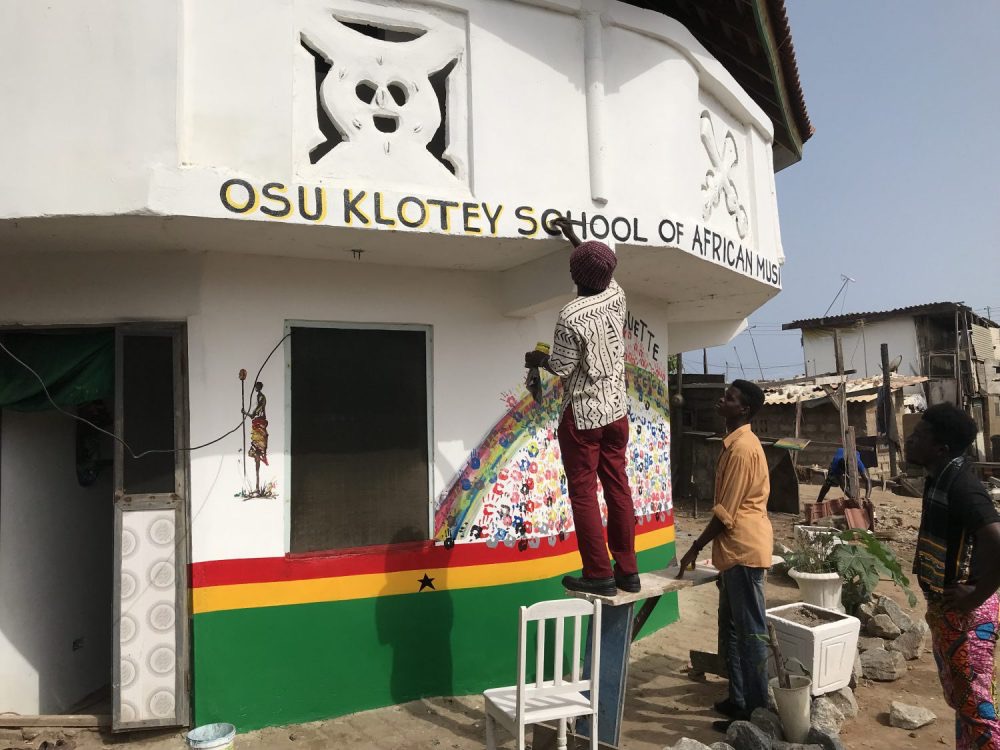
Music, dance and environmental education today
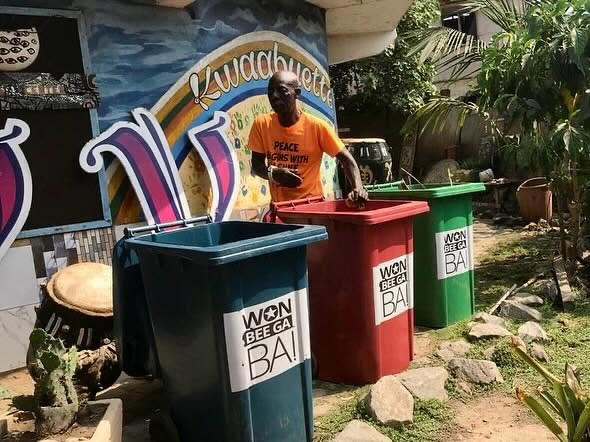
The area surrounding Kwaabuette has also changed considerably over the past decades. The Osu Klottey Lagoon is now densely populated, and waste and environmental pollution present major challenges for the people living there. The problem becomes particularly visible where the water of the lagoon eventually flows into the Atlantic Ocean.
Protecting its immediate environment has been important to Kwaabuette for many years. Today, music, dance, creative education and environmental protection are therefore becoming increasingly connected.
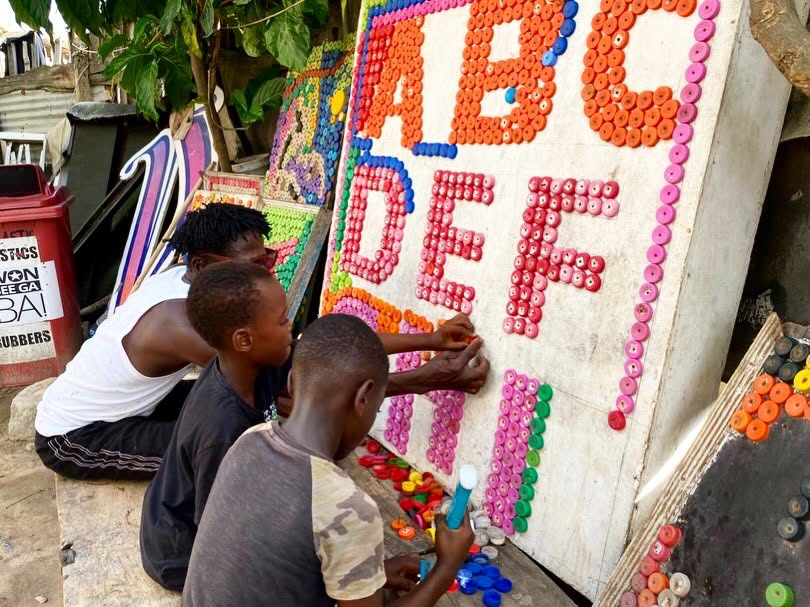
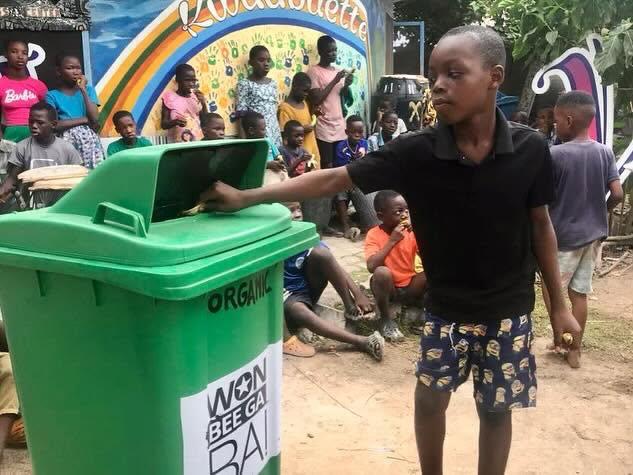
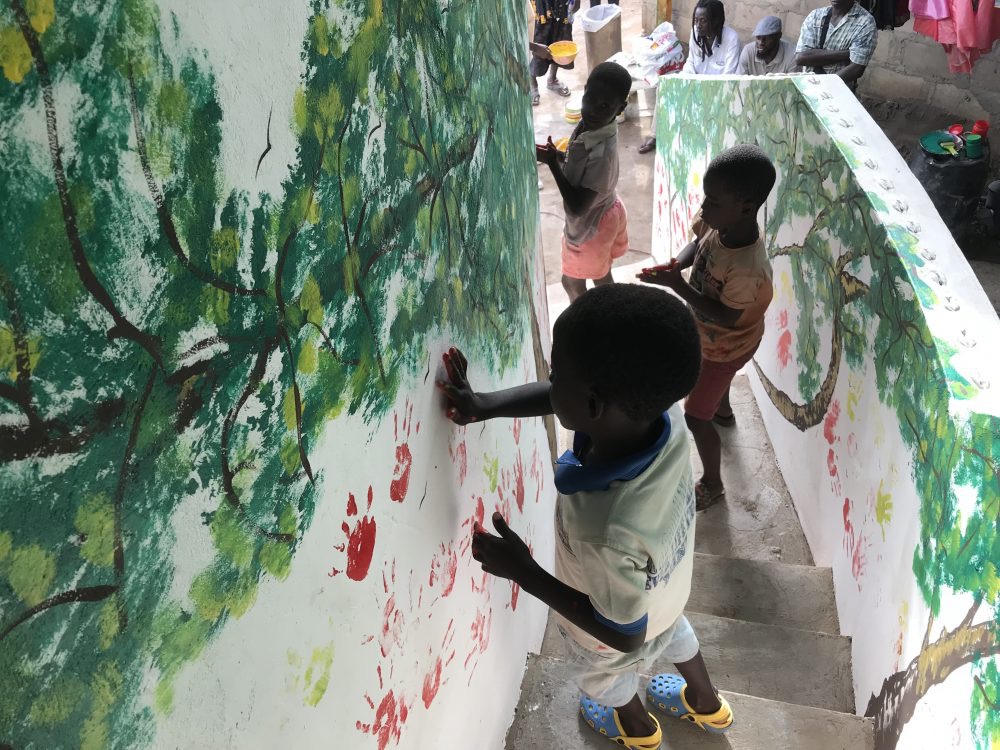
Every Sunday, free creative workshops are held for children and young people from the local community. Together they paint, build, learn, make music and dance. In a playful and creative way, the children explore issues such as waste, recycling, nature and the protection of their own environment.