WON BEE GA, BA!
Together for a Cleaner Accra
Won Bee Ga, Ba! is a Ghanaian environmental initiative and registered non-profit organisation based in Accra. We bring together practical environmental action, environmental education, research and data collection, recycling and upcycling, as well as art, music, dance and sport. Children, young people and members of the surrounding communities are at the heart of our work. Together, we aim to raise environmental awareness, develop practical solutions and help protect Accra’s coastline.
Our work initially focuses on a stretch of coastline approximately five kilometres long, between the historic neighbourhood of Jamestown and Osu. Here, the consequences of environmental pollution meet a long history of art, traditional culture and community engagement. It is from these connections that our initiative has grown.
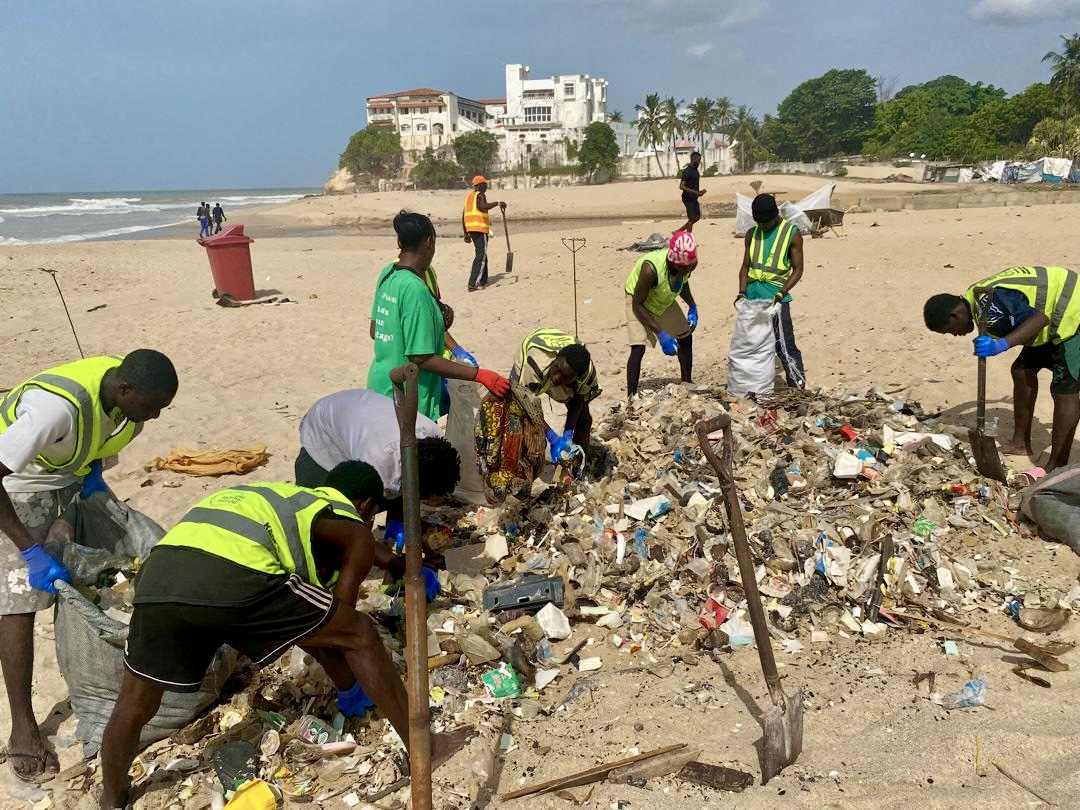
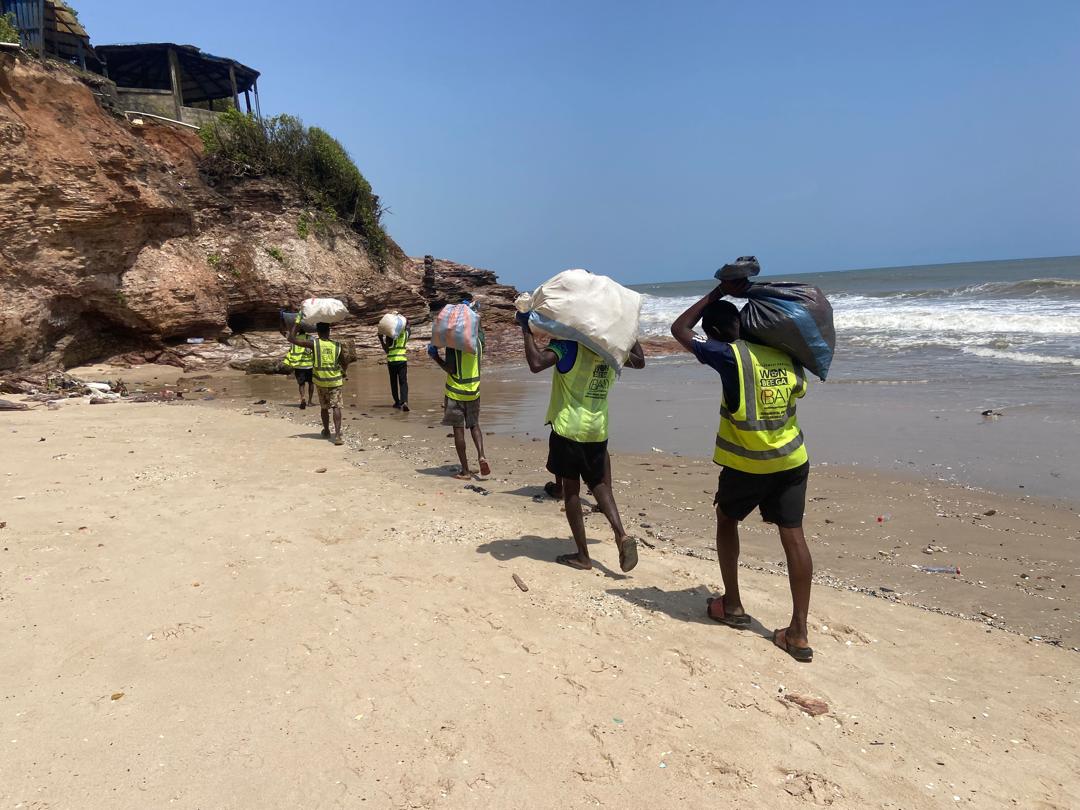
Pilot Project 2022–2025 – Collecting, Documenting and Understanding
Between 2022 and 2025, Won Bee Ga, Ba!, together with Ankwa Roots e. V. and with substantial support from KAPPE Projektentwicklung in Braunschweig and the Karl-Feldhahn Foundation in Hamburg, developed an extensive pilot project at Central Beach in Jamestown. The aim was to build on existing clean-up activities, gain a deeper understanding of the waste problem and establish a network for long-term cooperation.
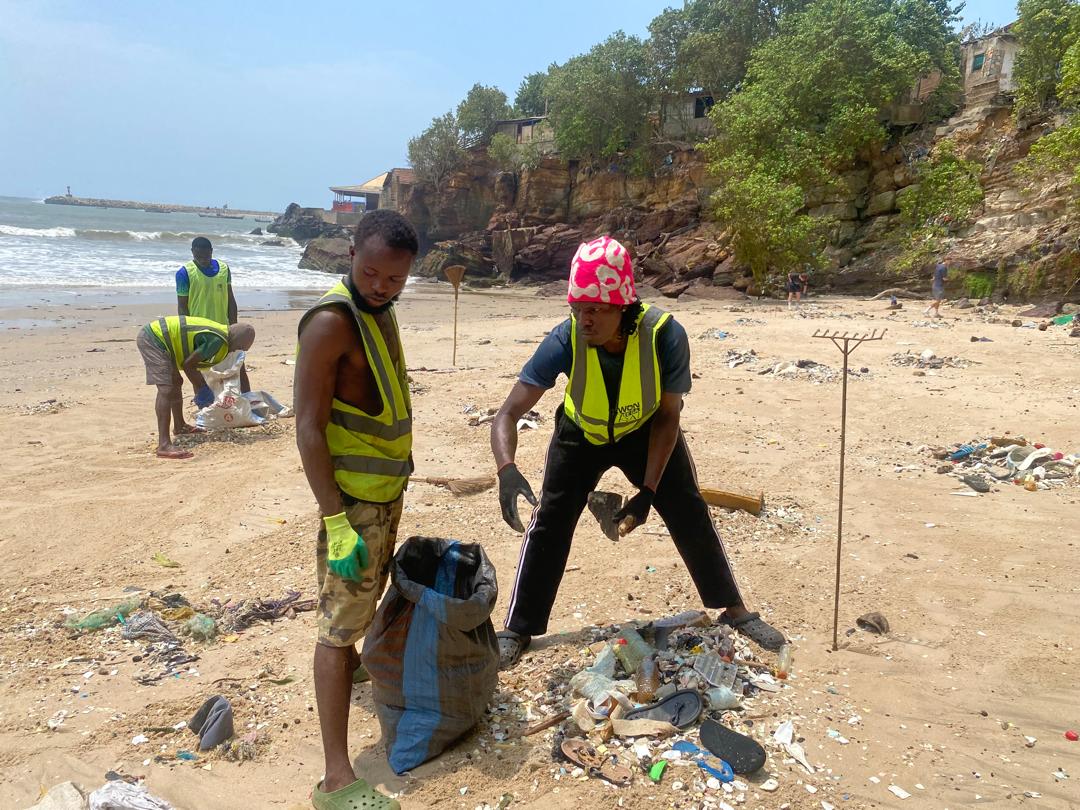
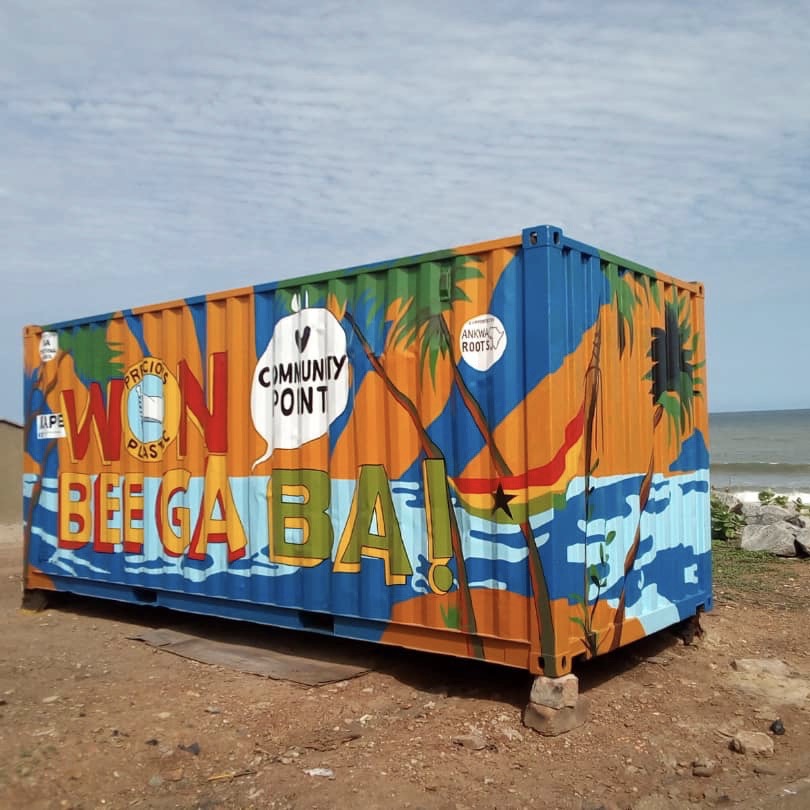
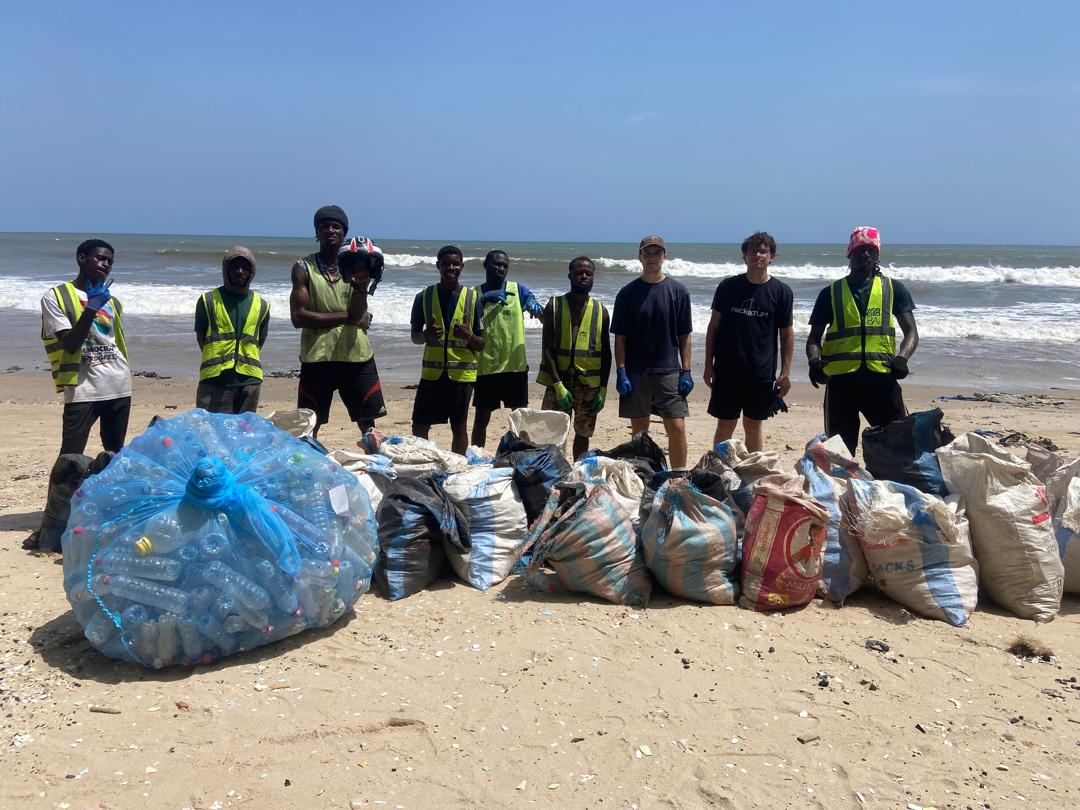
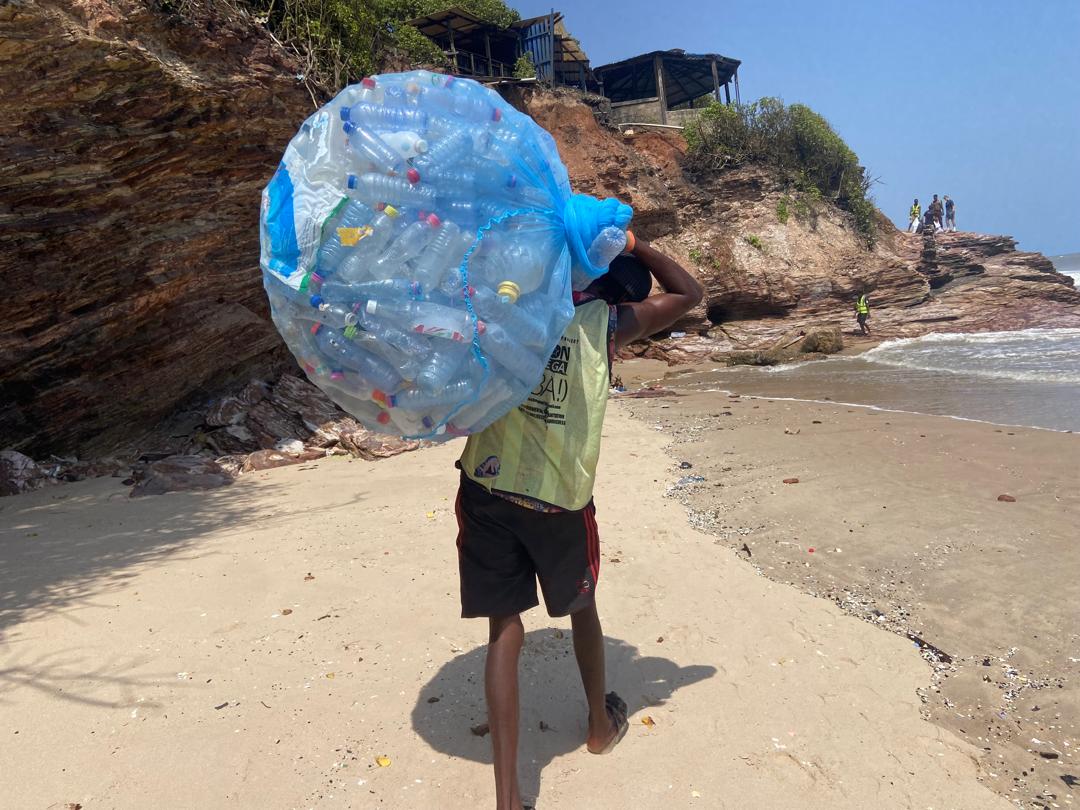
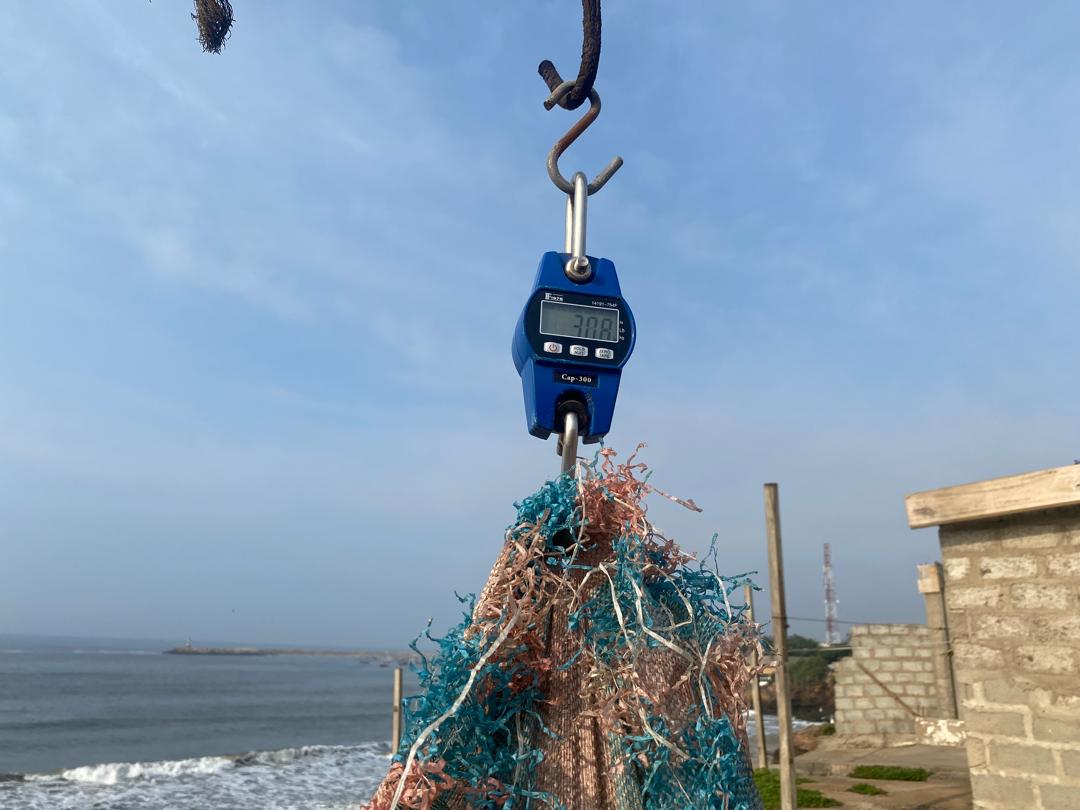
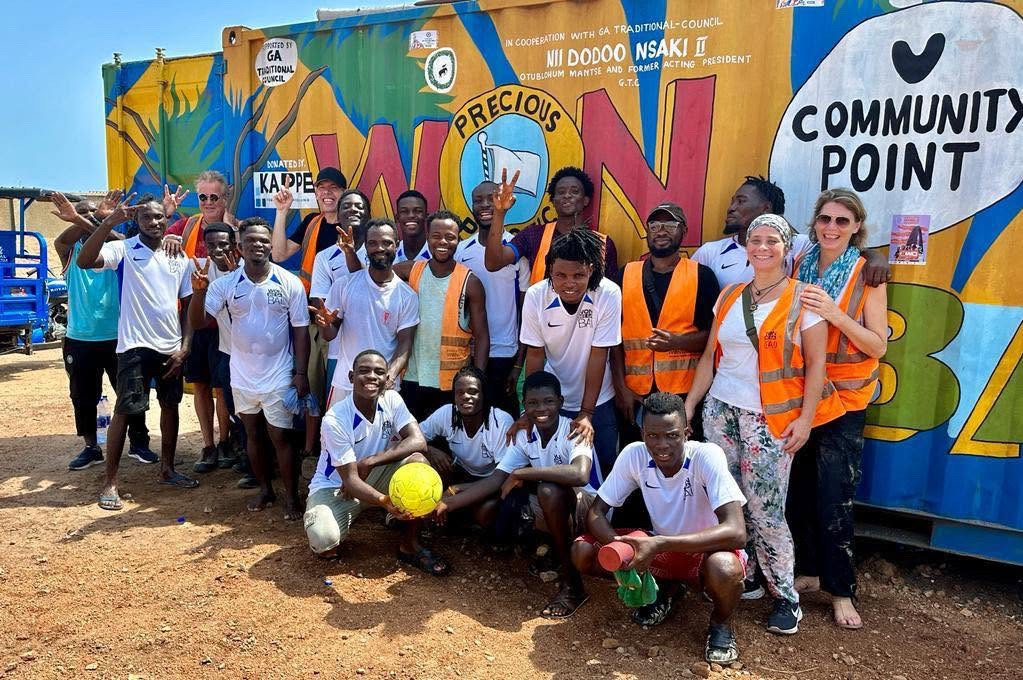
What began as smaller community activities developed into regular, organised environmental work. A container serving as a Community Point became a permanent meeting place for weekly clean-ups, initially involving around 10 to 20 volunteers. Alongside cleaning the beach, music, dance, beach football and social gatherings were part of the activities from the very beginning. At the same time, we began systematically collecting, sorting, weighing and documenting the waste, while exploring initial opportunities for reuse and recycling.
Another important focus was building relationships with local organisations, recycling companies and government institutions. Working with partners such as The Or Foundation, we also explored the consequences of international waste flows, particularly the problem of textile waste. Our activities were also featured in research and documentary projects, including work connected with Greenpeace.
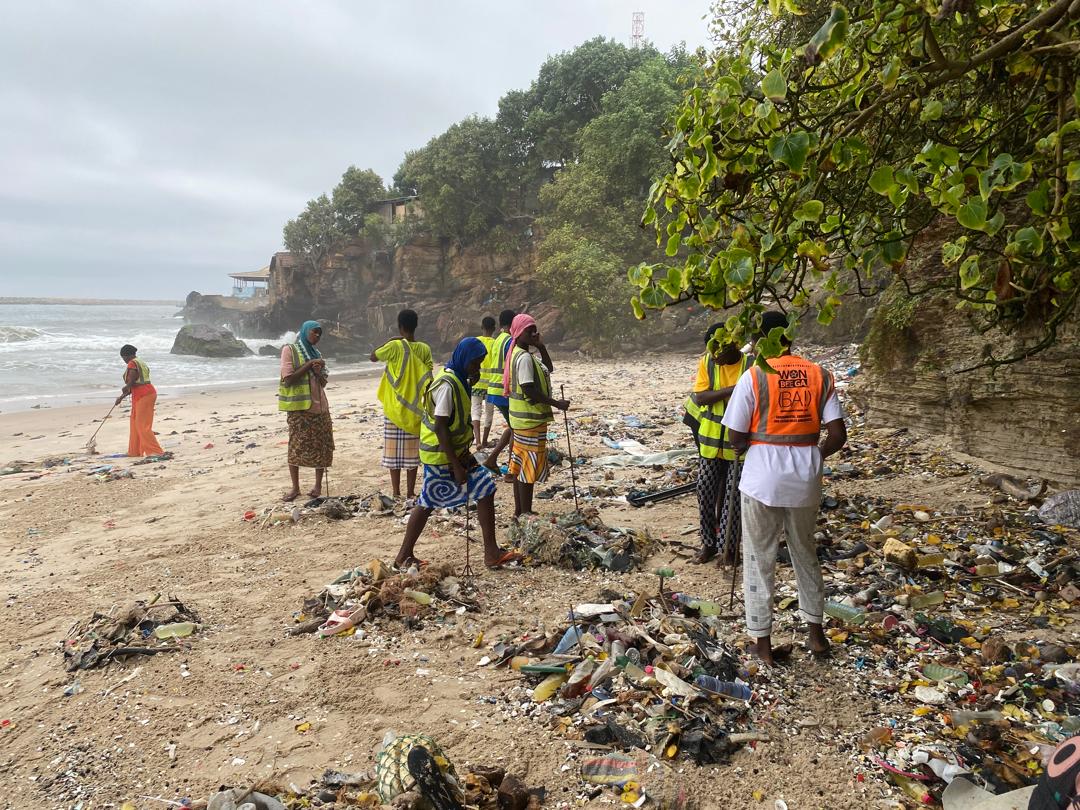
One of the most important findings of the pilot project was the enormous complexity of Accra’s waste problem. The beach is only the visible endpoint: large quantities of waste travel through streets, open drainage channels, rivers and lagoons before eventually reaching the coast. Regular beach clean-ups therefore remain an essential part of our work, but they cannot solve the problem on their own.
The beach is the final destination. The solution must begin in the city.
Based on our investigations and practical experience, we produced an initial research document examining nine interconnected areas of waste management in Ghana. It brings together our findings so far and helps us better understand the causes and connections behind this complex problem, identify possible courses of action and develop educational materials.
We see this document as an open and evolving foundation for further work, which can be expanded and revised as new experiences, investigations and insights emerge. It is also intended to support organisations and government institutions working towards the long-term development of a comprehensive master plan.
From an Initiative to an Independent Organisation
Since 2025, Won Bee Ga, Ba! has been officially registered as an independent Ghanaian non-profit organisation. This has provided an important foundation for developing our work over the long term, strengthening local responsibility and expanding cooperation with communities, environmental organisations, recycling businesses and government institutions.
Our weekly clean-ups at Ananse Beach have now become a well-established tradition. Over the years, numerous volunteers from Ghana and many other countries, as well as local and international organisations, have joined our activities.
Every Sunday morning, we meet at the beach to clean up together. Afterwards, we often play beach football, make music or enjoy open drumming sessions. Everyone is warmly welcome to come along and help.
Since 2026, we have gradually been expanding our activities to Osu, at the other end of the coastline, where our shared cultural roots run just as deep. Here, we aim to strengthen existing environmental activities and combine them with new educational and cultural programmes.
Our Vision – Developing Long-Term Solutions Together
The people carrying out this work are especially important to us. Their commitment deserves recognition, protection and fair pay. At the same time, we want to reach children and young people in particular through environmental education, creative workshops, art, music, dance and sport, giving them opportunities to play an active role in shaping their surroundings.
The people carrying out this work are particularly important to us. Their commitment deserves recognition, protection and fair pay. At the same time, through environmental education, creative workshops, art, music, dance and sport, we want to reach children and young people in particular and give them opportunities to play an active role in shaping their environment.
We know that this is a long journey. Together with our partners, we therefore aim to build practical experience step by step, strengthen existing structures and develop sustainable solutions.
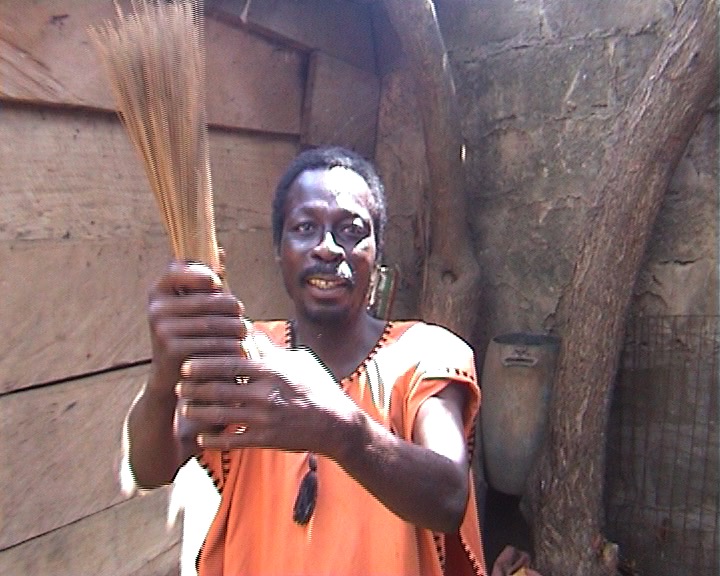
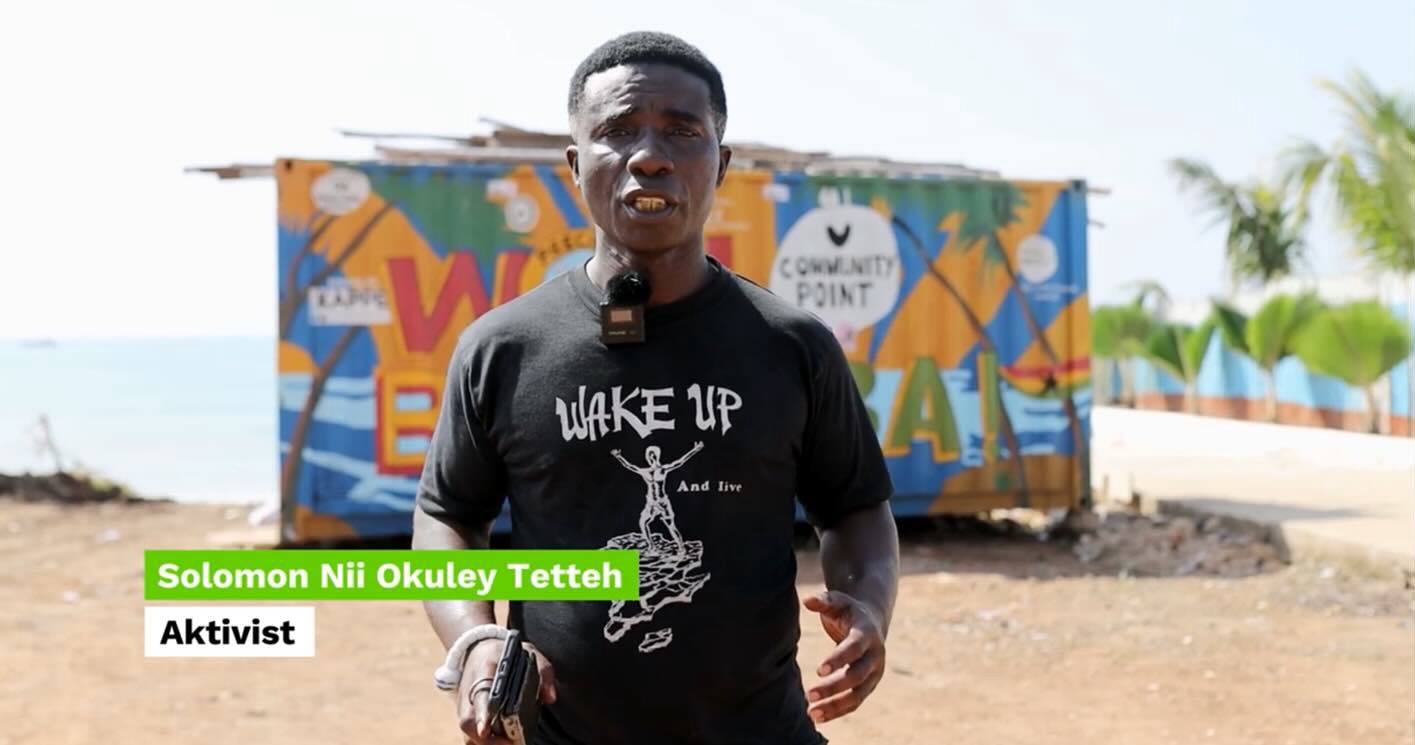
Solomon Okuley Tetteh – Project Leader and Traditionalist
Solomon Okuley Tetteh ist Projektleiter und CEO von Won Bee Ga, Ba! und eine der zentralen Persönlichkeiten unserer Initiative. Seit mehr als zehn Jahren engagiert er sich für Umweltbildung, den Kampf gegen Plastikverschmutzung, Jugendarbeit und die Einbindung lokaler Communities. Gemeinsam mit Claas Wiechmann von Ankwa Roots e. V. aus Deutschland plant, organisiert und entwickelt er seit 2022 die Projekte in engem und regelmäßigem Austausch.
Solomon’s environmental commitment is deeply connected to his family’s traditional and spiritual roots. From childhood, his grandfather introduced him to the customs, rituals and oral traditions of his community. In 2024, he was elected Head of the Okuwe Family.
Solomon grew up at his family’s traditional shrine in Jamestown, Accra’s historic neighbourhood. The shrine is located close to the fishing harbour and our present-day clean-up area. The spiritual traditions practised there are closely linked to Accra’s major waterways, particularly the Nsaki and Densu rivers. Traditional rituals and ceremonies continue to preserve the spiritual connection to these waters, which are deeply woven into the history, daily life and natural environment of Accra.
For Solomon, protecting water is therefore much more than a modern environmental concern. It is part of a responsibility towards nature, waterways and his community that has been passed down through generations. This connection between traditional knowledge and practical environmental protection also shapes his commitment to Won Bee Ga, Ba!
Alongside organising clean-ups, environmental education activities and workshops, Solomon coordinates cooperation with local and international partners. A particularly important relationship exists with the Ga Traditional Council. Since 2017, he has shared responsibility for maintaining the cleanliness and upkeep of the palace grounds. The Traditional Council has also provided the initiative with premises that continue to be used for organisational and community activities.
Our Work and Projects
Research Study – Understanding the Waste Problem
During our pilot project from 2022 to 2025, we collected, sorted, weighed and documented the waste arriving on the beach. At the same time, we examined existing waste management structures in Accra and established contacts with environmental initiatives, recycling companies, and municipal and government institutions. Our research focused not only on the origin and composition of the waste, but also on how collection, transport, disposal and recycling are interconnected, and where opportunities for better cooperation might exist.
The findings were brought together in an initial research document covering nine interconnected areas. They highlight the complexity of the waste problem and demonstrate that individual measures can only be successful in the long term when they form part of a wider, coordinated system.
Some of our most important findings so far include the following:
One of the fundamental requirements is safe landfill sites and reliable disposal facilities for non-recyclable residual waste. These must be designed and operated in ways that protect rivers, waterways and groundwater. Without reliable disposal of residual waste, waste separation and recycling cannot be expanded sustainably across the city.
At the same time, waste must be intercepted within Accra before it reaches the sea through open drainage channels, rivers and lagoons. Based on our initial rough assessments, this would require a large, coordinated workforce operating along the city’s extensive network of waterways and open drainage systems to tackle the enormous quantities of waste entering the ocean every day.
Our working title, “2000 Man Project”, represents an initial estimate of the scale of the challenge. The figure is not a final calculation, but a preliminary reference point. In the long term, such measures would need to be further developed and expanded. The many local environmental initiatives already carry out valuable work and could play an important role in this process. However, a challenge of this scale cannot be addressed through voluntary efforts alone. It requires a long-term, government-coordinated strategy, appropriate equipment, safe working conditions and reliable funding.
We see our research document as an open foundation for continued collaboration. It should be developed further through additional research, practical experience and new findings. Through this work and the networks we have already established, we hope to support Ghana in developing a comprehensive master plan that brings together environmental, social, economic and organisational solutions.
What Happens to the Waste We Collect?
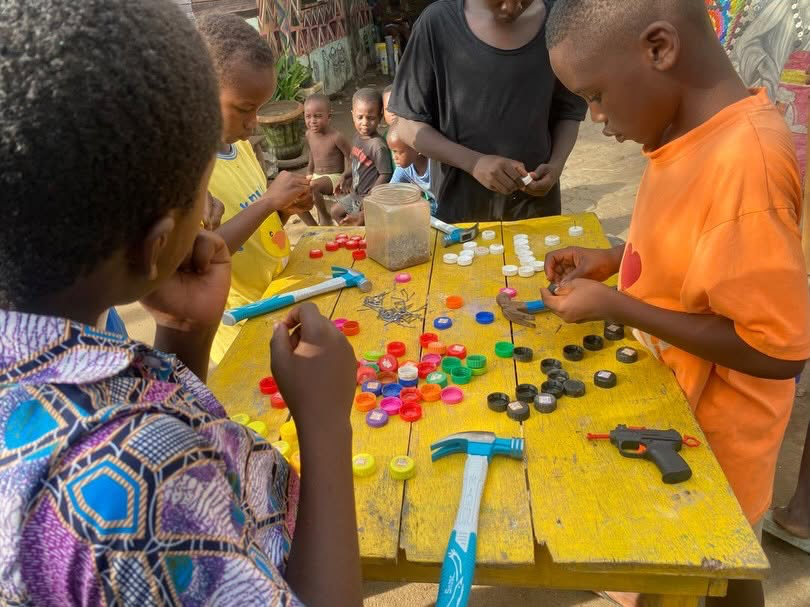
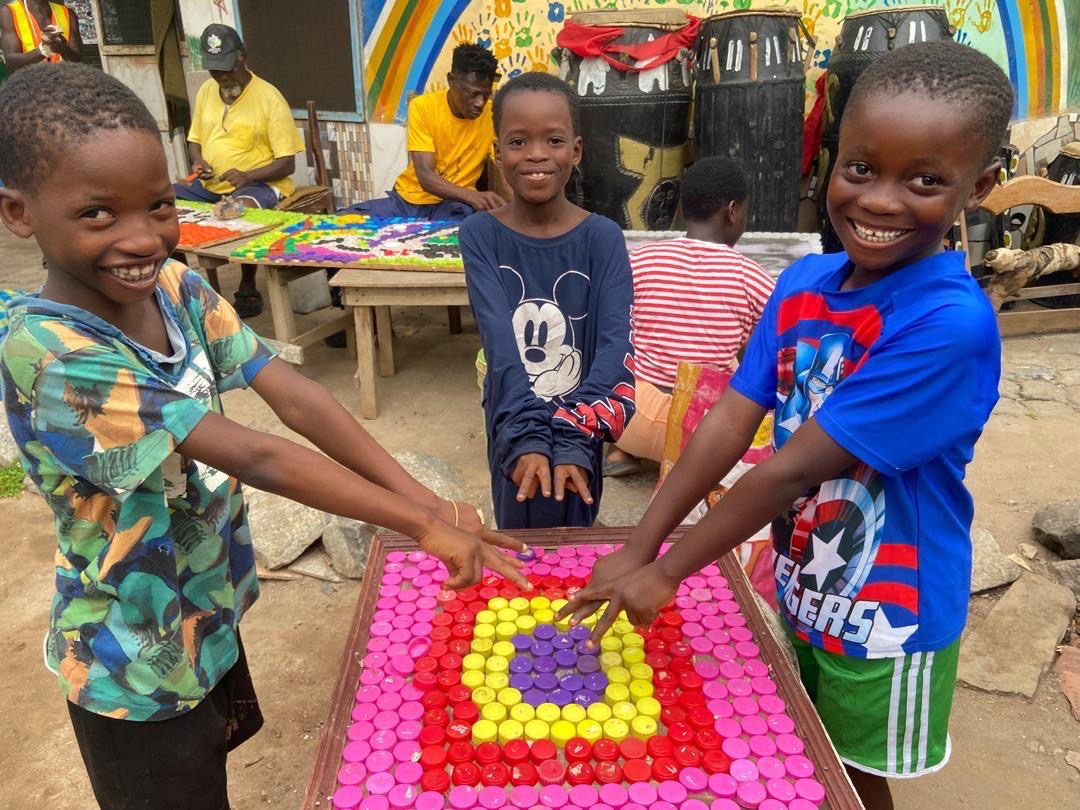
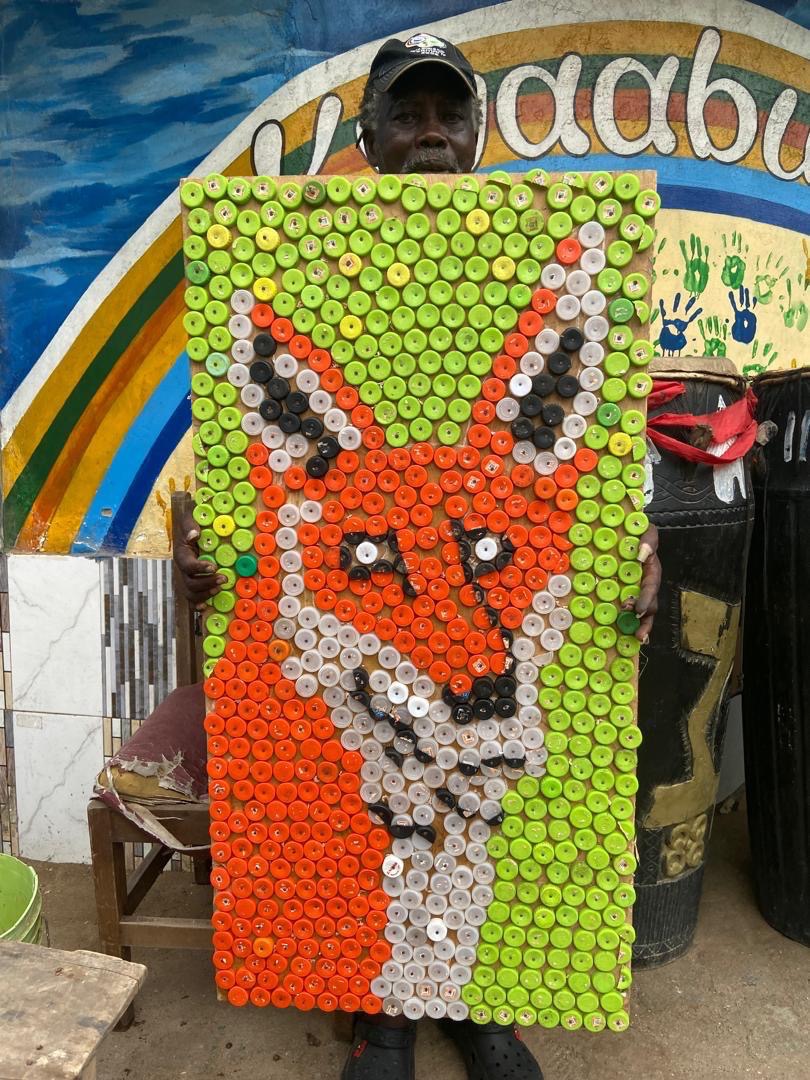
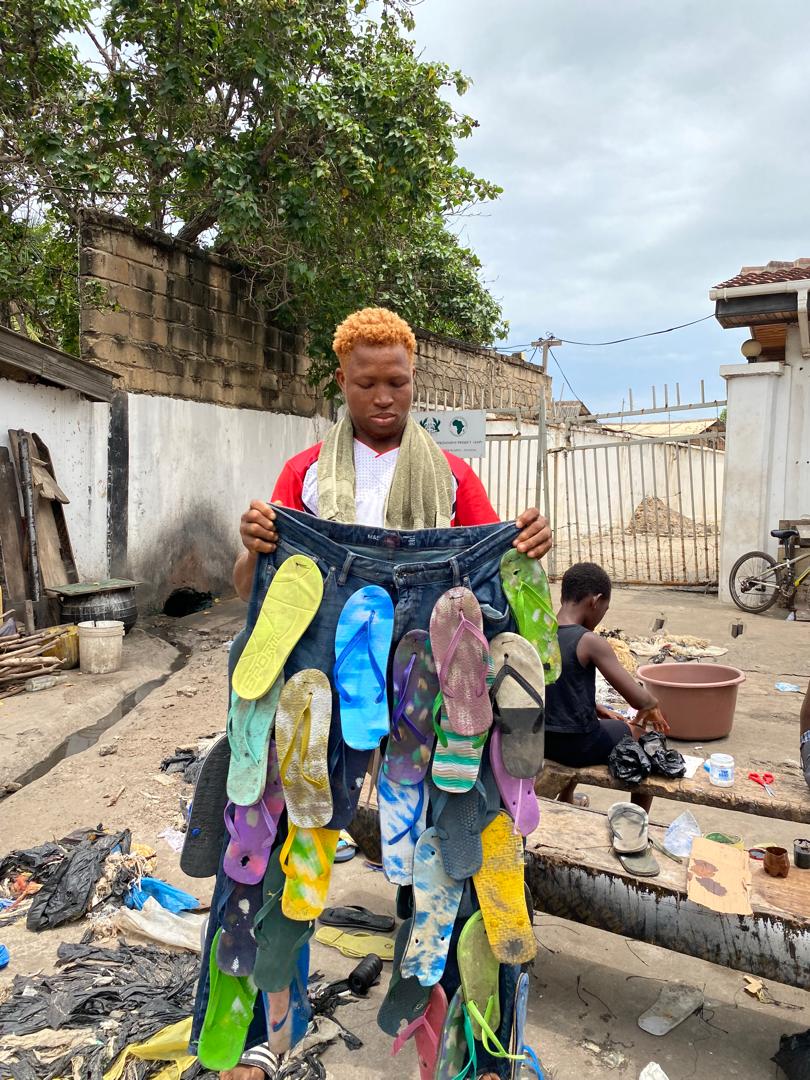
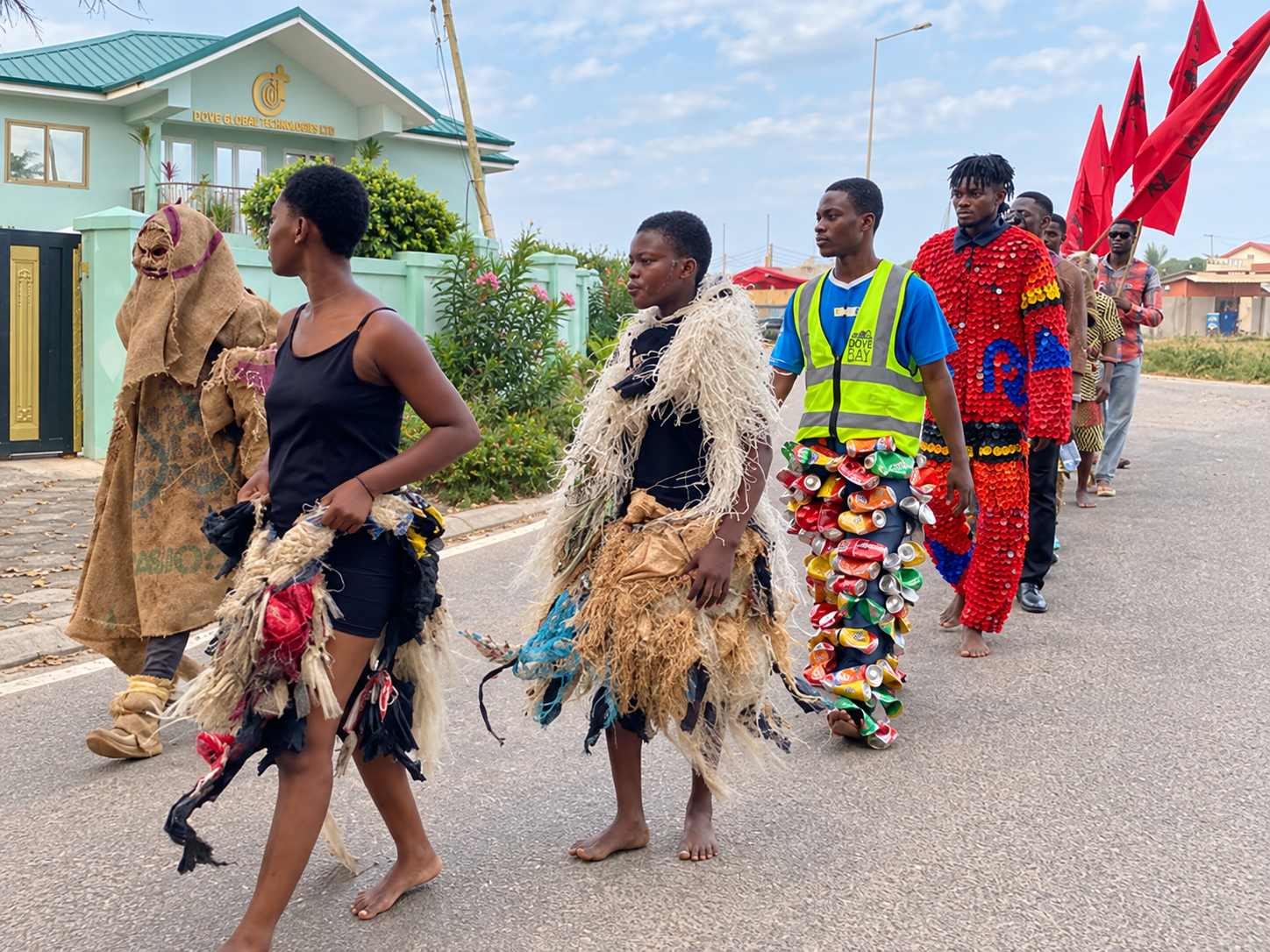
Our work does not end when the rubbish bags are full. After each clean-up, we try to reuse or find suitable ways of processing as much of the collected material as possible. Some of it is used directly in environmental education and creative workshops. Bottle tops, plastic fragments and other discarded materials are transformed into pictures, sculptures, costumes and new artistic ideas. In this way, waste becomes a resource that children, young people and volunteers can work with creatively while learning about pollution and reuse.
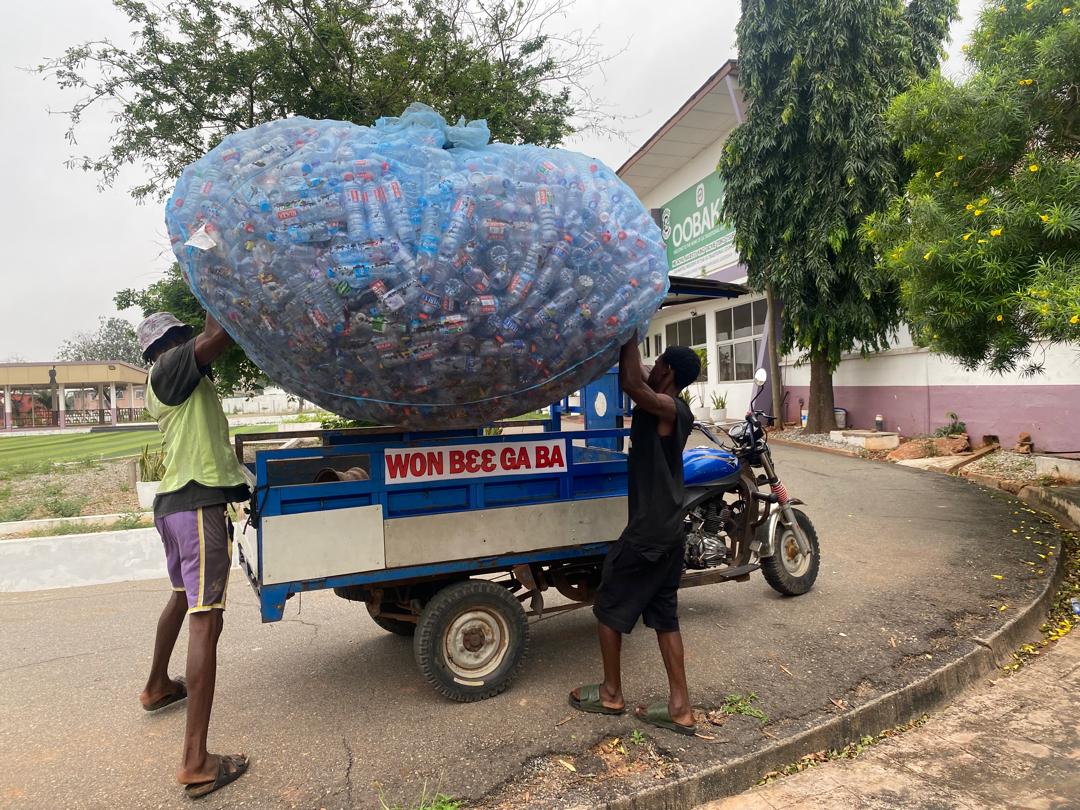
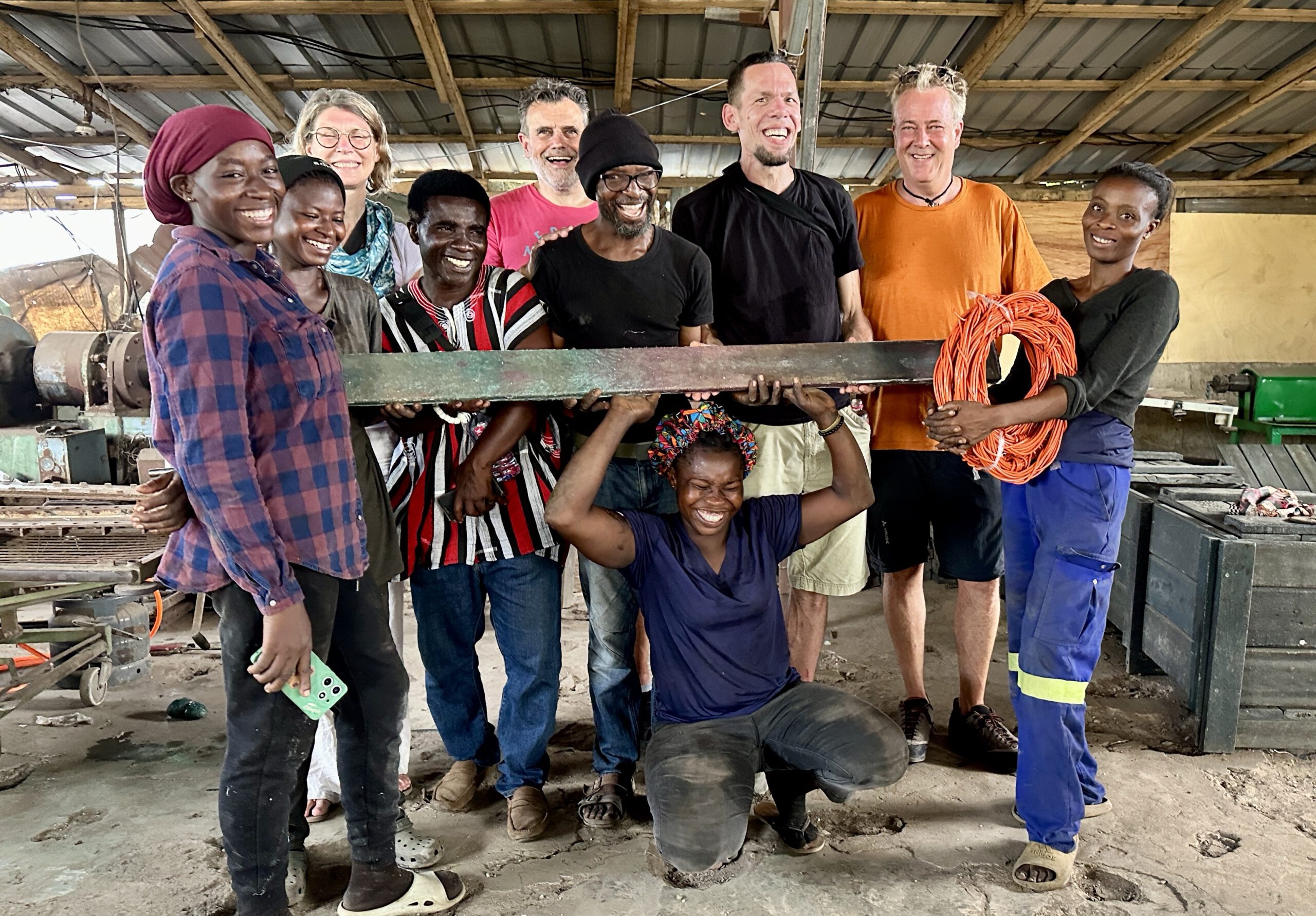
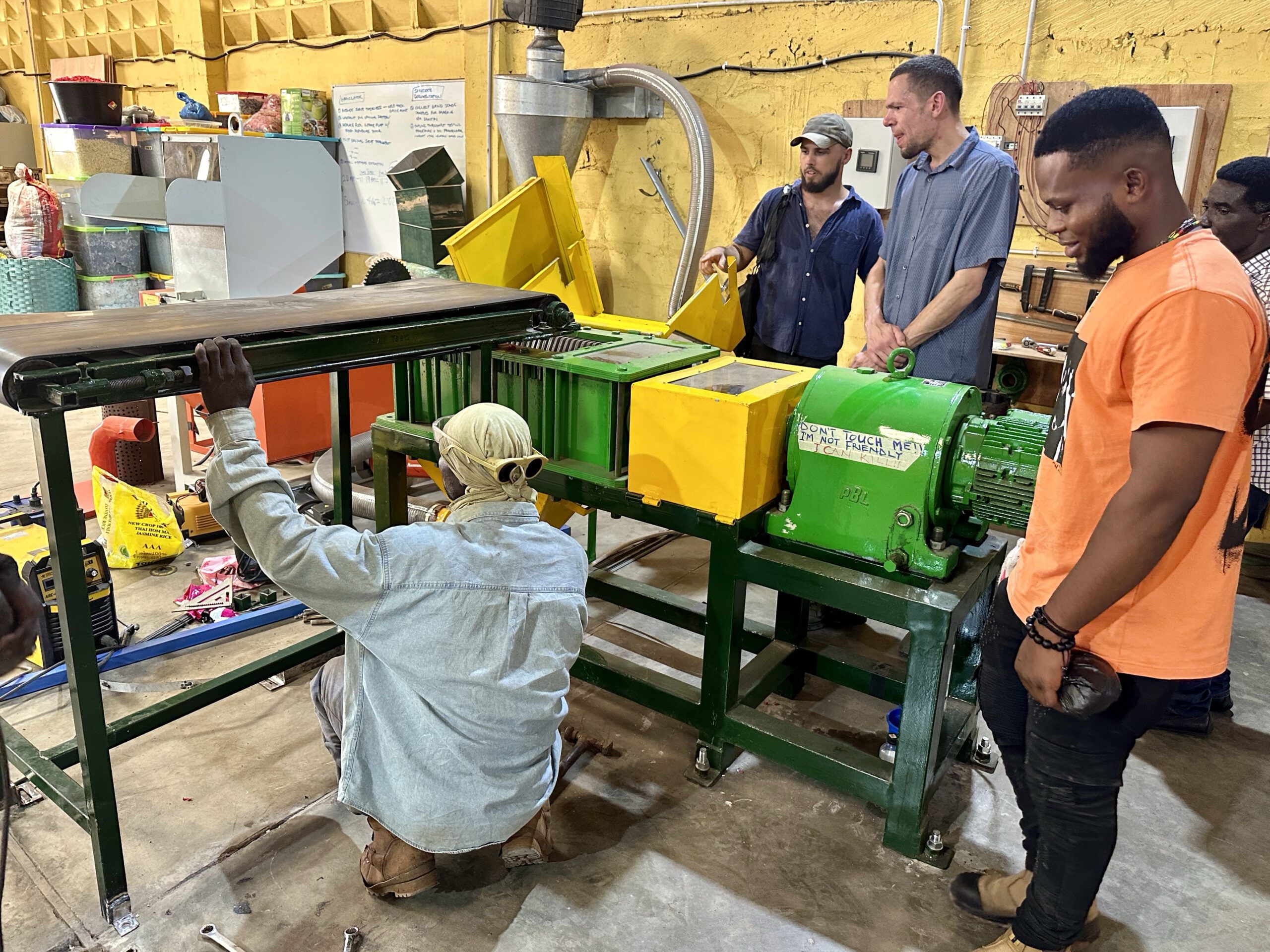
We pass recyclable plastics on to our local partner Pyramid Upcycling. Ankwa Roots e. V. has financed and purchased a shredder and an extruder for the workshop. Through joint workshops, our volunteers have already learnt how to operate these machines and explored different methods of processing plastic.
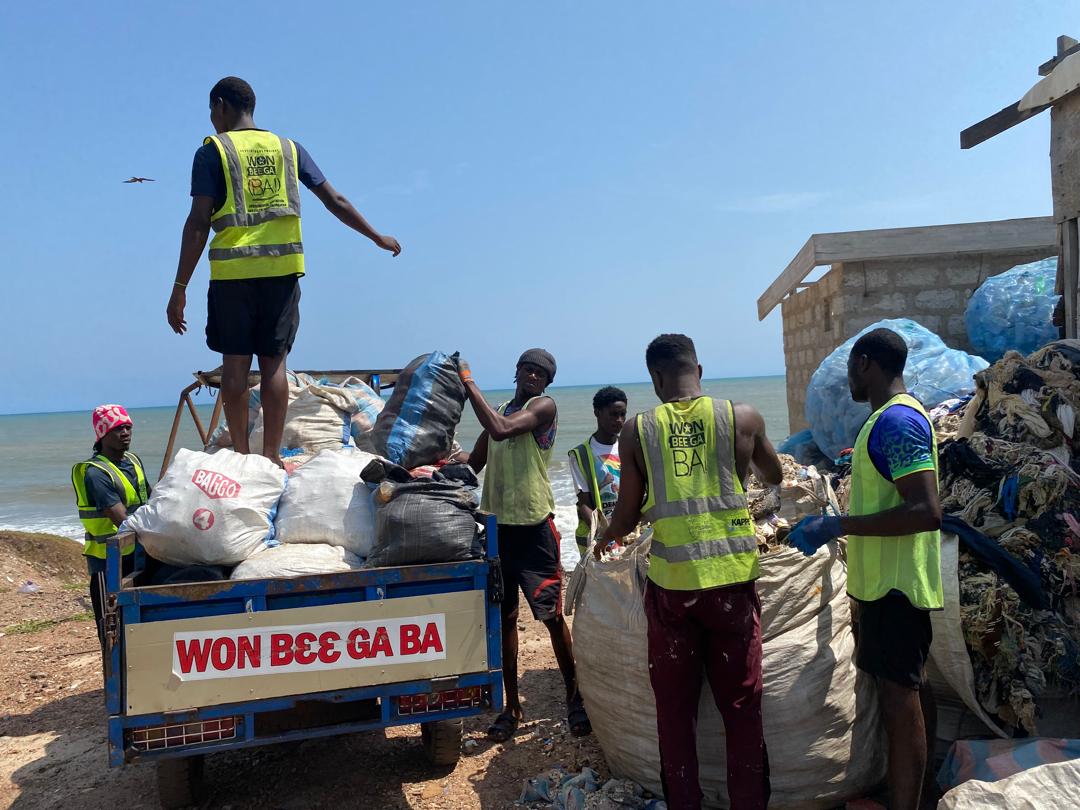
Not all the waste we collect can currently be reused or recycled. The Or Foundation supports us with the removal of non-recyclable residual waste. However, safe disposal remains a major challenge. Simply moving waste from the beach to another unsafe location does not solve the problem.
Local Recycling and Our Own Product Development
Together with Pyramid Upcycling, we aim to expand our recycling workshops and gradually establish our own product development team. Our goal is to combine existing knowledge, practical skills and new technologies to create useful, durable products from recycled materials.
Initial benches and tables made from recycled rigid plastic have already been produced and tested outdoors. Building on this experience, we hope to develop strong plastic beams, construction components and other products that could be used for fences, steps, decking and various building or design projects. We also want to explore ways of incorporating materials that are more difficult to recycle, such as plastic film and carrier bags.
Our ambitions go beyond technical solutions. We want to strengthen local recycling systems, share knowledge and skills, and create new jobs and economic opportunities in the long term. Valuable materials should, wherever possible, be processed and used locally in Ghana rather than being exported over long distances for further processin
Fast Fashion – A Global Problem on Accra’s Coastline
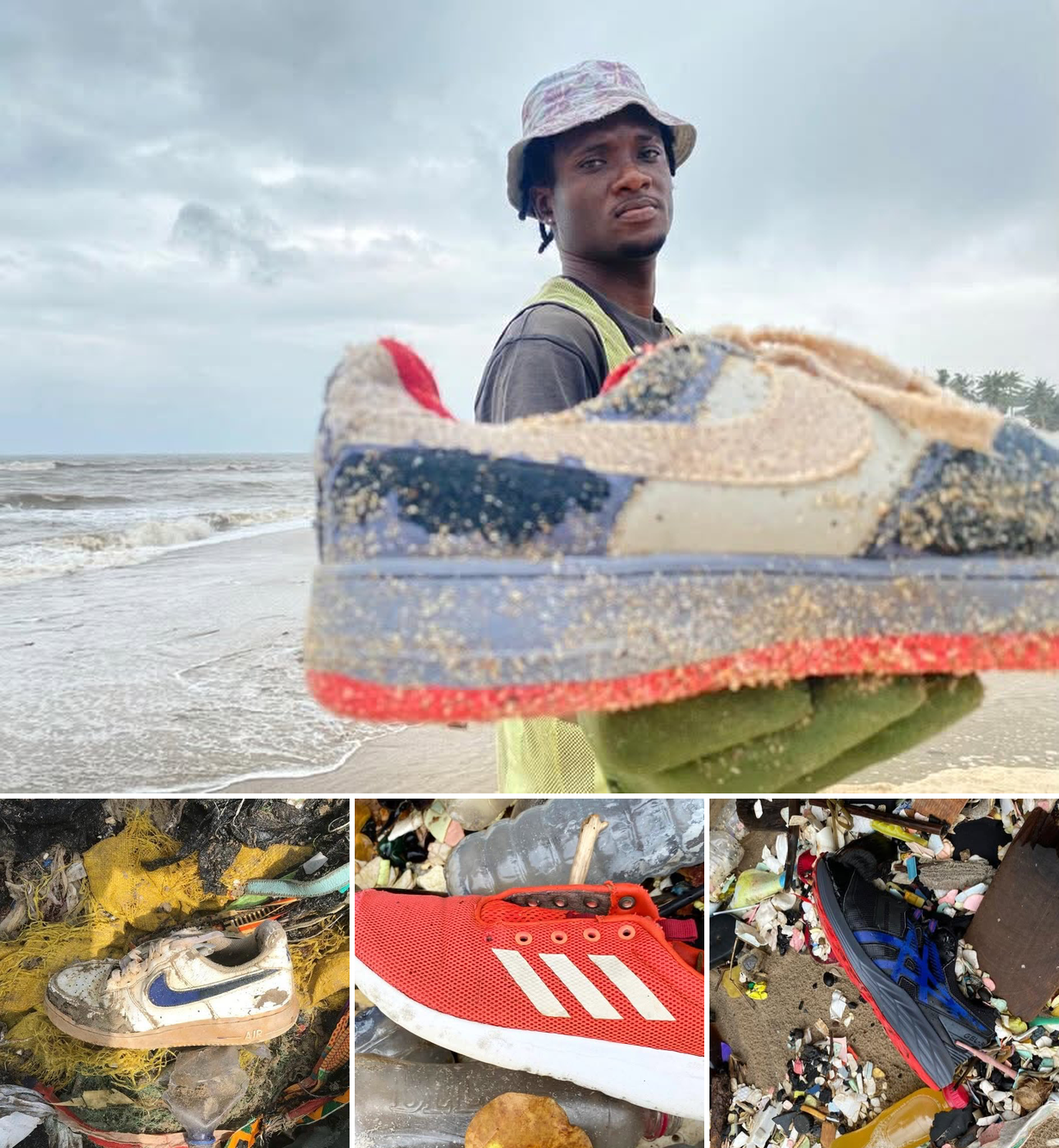
Textile waste is one of the most visible forms of pollution along Accra’s beaches. An important partner in our work is therefore The Or Foundation, which addresses the consequences of the international trade in second-hand clothing and fast fashion, particularly around Kantamanto Market.
Kantamanto Market in Accra is one of West Africa’s major centres for second-hand clothing. Large quantities of imported garments are traded here, many of which originally come from Europe and other wealthy industrialised countries. Not all of these clothes can be resold or reused. Some end up as waste in the city, its waterways and eventually along the coast.
We also collect and document textile waste during our beach clean-ups. As part of its work, The Or Foundation examines the brands and labels found on discarded clothing, helping to reveal the connections between international fashion companies and textile waste in Ghana. These include well-known global sportswear and fashion brands. Such investigations help us better understand where the waste comes from and how it is linked to international production and consumption.
In 2023, Greenpeace, one of the world’s best-known environmental organisations, documented work on Accra’s textile waste problem for the documentary series “Kleider machen Müll – Die Realität hinter der Fast-Fashion-Industrie” (Clothes Become Waste – The Reality Behind the Fast Fashion Industry). The Or Foundation and our Ghanaian partners were involved in the research and documentary work. Textile waste demonstrates clearly that Accra’s environmental problems do not originate in Ghana alone, but are also linked to international systems of production, consumption and trade.
For this reason, we must also work towards involving companies from the international textile and plastics industries in supporting local environmental projects, recycling infrastructure and employment opportunities. Responsibility for dealing with waste should not rest solely with the people who live with its consequences every day.
Environmental Education – Learning by Doing
Environmental education for children and young people is a central part of our work. We want them not only to understand that plastic and other waste materials cause problems, but also to discover for themselves where waste comes from, how it travels through the city, what dangers it creates and how materials can be avoided, handled safely or reused.
Through simple illustrations, creative games, community clean-ups and practical workshops, we aim to make these connections easy to understand and experience first-hand. Art, music, dance and sport have played an important role from the very beginning. Collected materials are transformed into pictures, sculptures, costumes and other works of art. Traditional Ghanaian music and dance also connect environmental education with the culture and history of their country.
Together with local partners, we want to continue developing and expanding our educational activities. Environmental education should not simply provide knowledge; it should also be enjoyable, encourage creativity and inspire children and young people to take responsibility for their surroundings.
A Second Location – Osu Klottey Lagoon
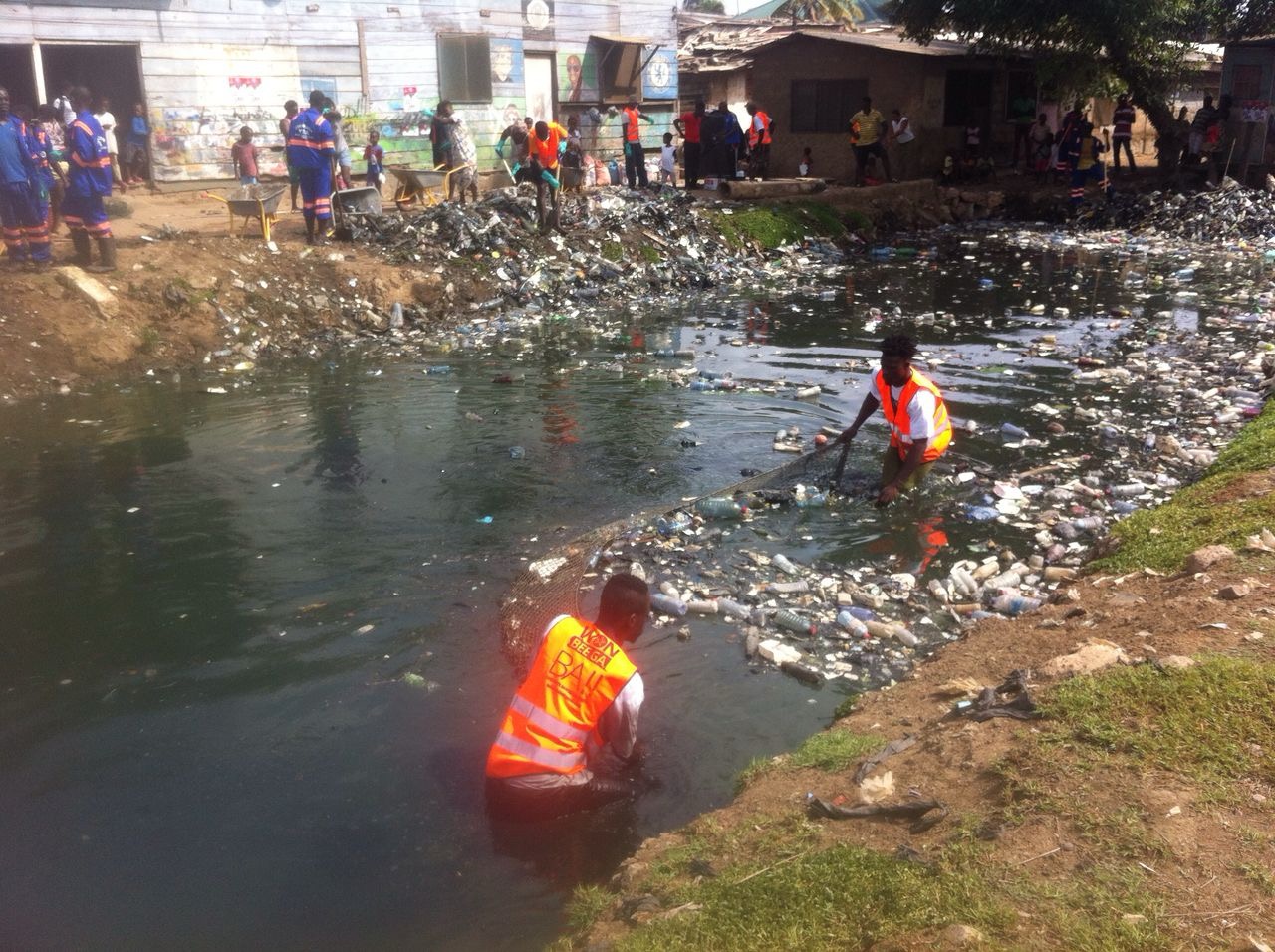
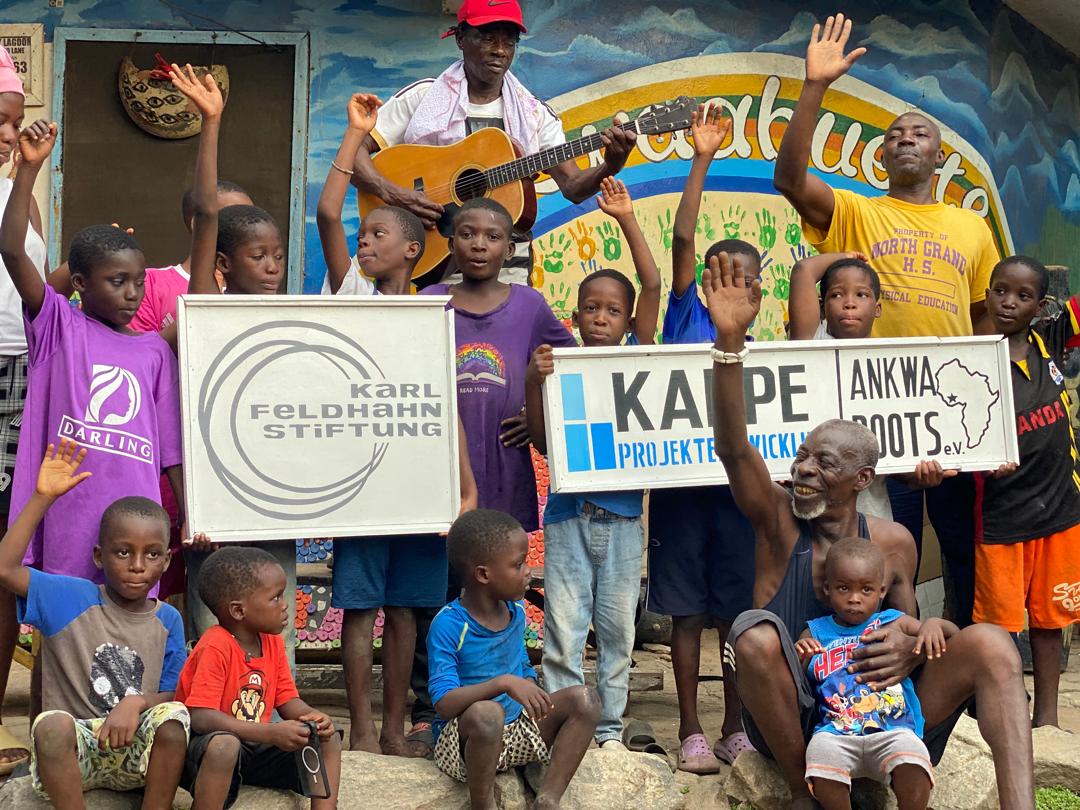
Since 2026, we have been gradually bringing the experience gained in Jamestown to a second location in Osu, at the other end of the approximately five-kilometre stretch of Central Beach. The Kwaabuette School of African Music and Dance is located directly beside Osu Klottey Lagoon and is one of the cultural birthplaces of our initiative. For decades, it has been an important meeting place for traditional music, dance and community life.
Community environmental activities take place here on the first Saturday of each month, known as National Sanitation Day. We want to strengthen this tradition by introducing regular workshops, music, dance and beach football. In the long term, we hope to organise activities once or twice a month, involving more children, young people and members of the surrounding communities.
The lagoon also offers opportunities to test practical solutions. One example is the development of floating waste barriers that could intercept rubbish in the waterways before it reaches the sea.
Art and the Environment – Working with Kake Dance Ensemble
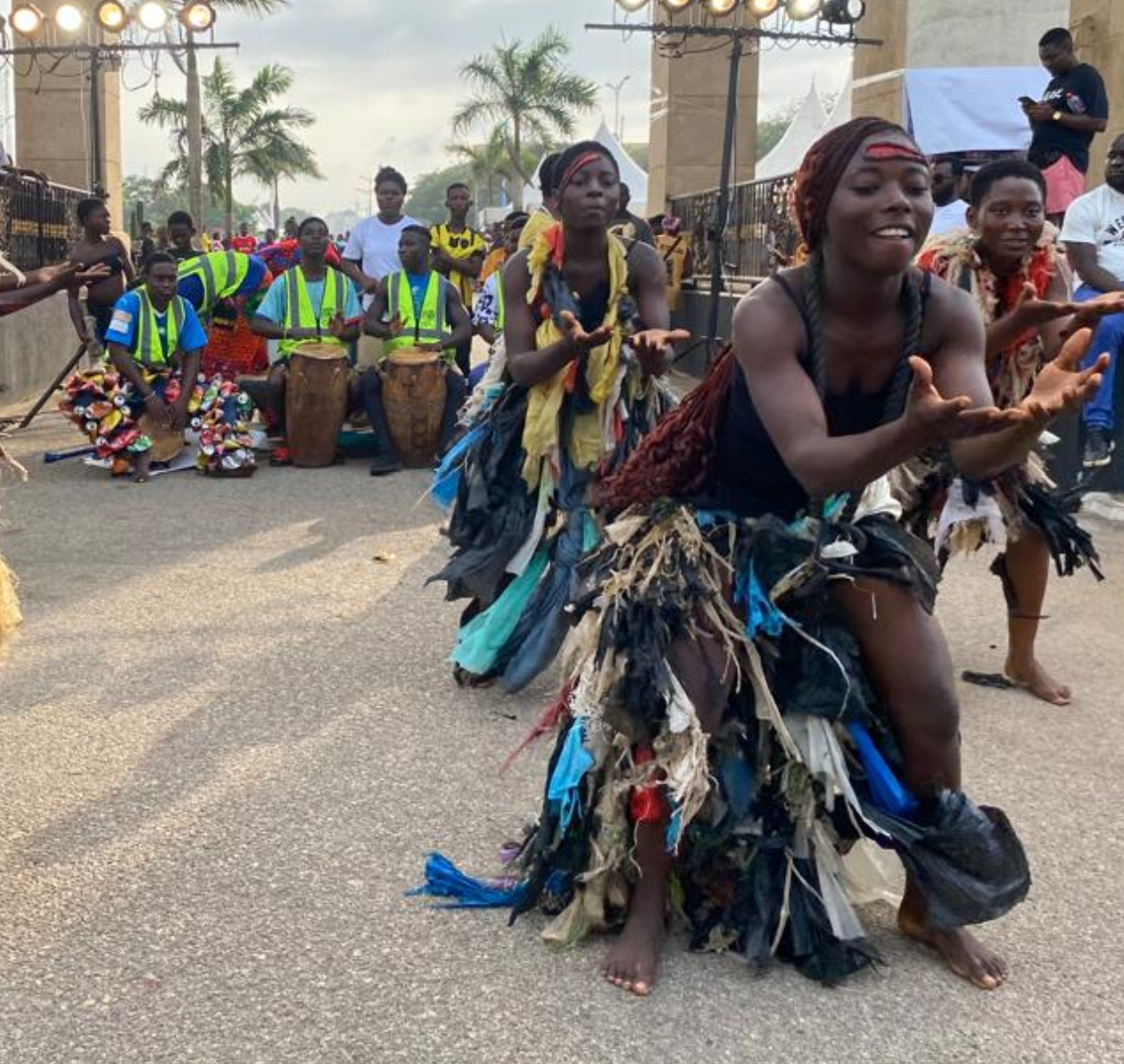
Since 2025, the Kake Dance Ensemble has been one of our important partners. Many of the children and young people in the group take part in our clean-ups and environmental workshops. This collaboration inspired the idea of raising awareness of environmental problems not only through clean-up activities and education, but also through music, dance and public performances.
Together, we are developing costumes, figures and stage elements from plastics, textiles, electronic waste and other discarded materials. Initial elements of this collaboration have already been presented at the Chale Wote Street Art Festival in Accra. This work is now developing into the international arts and environmental project “Roots Across the Water – Spirit of the Water”.
For January and February 2028, we are planning a three-week project period involving workshops, rehearsals and four public environmental performances at different locations across Accra. The performances will symbolically follow the journey of waste through the city, along its waterways and towards the Atlantic Ocean. Through music, dance and art, we hope to reach people who may not otherwise engage with conventional environmental campaigns.
Working Together with Strong Partners
Won Bee Ga, Ba! was born out of cooperation and continues to grow through cooperation. Our main supporters and funding partners include Ankwa-Roots e. V., The Or Foundation, the Ga Traditional Council, the Karl-Feldhahn Foundation and KAPPE Projektentwicklung.
From the early stages of our environmental work, we established connections with academic institutions, including the Entrepreneurship Hub at Technische Universität Braunschweig and Ostfalia University of Applied Sciences in Germany, and the Regional Maritime University (RMU) in Accra, Ghana.
Over the years, we have developed a growing network of local and international organisations, environmental initiatives, artistic groups, recycling businesses and research institutions.
These include the Kwaabuette School of African Music and Dance, Kake Dance Ensemble, Abajo Group, Pyramid Upcycling, Tide Turners, Plastic Punch, BuzStopBoys, The Referent, Recycle Up! Ghana, the Voluntary Workcamp Association of Ghana and the Ghana Scout Association.
Our wider network also includes connections with Greenpeace, Deutsche Umwelthilfe (Environmental Action Germany) and Dr. Kölsch Geo- und Umwelttechnik GmbH in Braunschweig, which has supported our research activities.
Each organisation brings its own experience, knowledge and opportunities. Our main priority is to continue expanding this network, strengthening existing relationships and bringing together people, organisations and institutions working towards practical, long-term solutions to Accra’s environmental challenges.
Our Next Steps – Growing Together
The experience of recent years has shown us that there is no single solution to Accra’s waste problem. The challenges are too large and too complex for individual initiatives to tackle alone. We therefore want to work with local communities, traditional authorities, government institutions and our partners to explore additional locations and identify where practical measures could have the greatest impact. On this basis, we aim to test new approaches, strengthen existing projects and gradually expand our activities.
In Jamestown, our long-term ambition is to establish our own environmental and education centre. At Osu Klottey Lagoon, we want to test further practical solutions and expand community environmental activities. Together with local recycling businesses, we hope to advance product development, offer additional workshops and create new economic opportunities.
Long-term progress will require not only government support, but also cooperation with research institutions, international organisations, development agencies and companies willing to take responsibility for the consequences of their products and waste streams. Won Bee Ga, Ba! aims to help connect these different stakeholders, share practical experience and contribute to the development of lasting solutions.
Throughout this work, people remain at the centre of everything we do. With the right support, voluntary commitment can develop into fair employment opportunities and reliable long-term structures. We know that this will take time, patience and many steps taken together. But every successful initiative, every new partnership and every person who gets involved brings us a little closer to our goal.
Our Roots – Art, Culture and Community
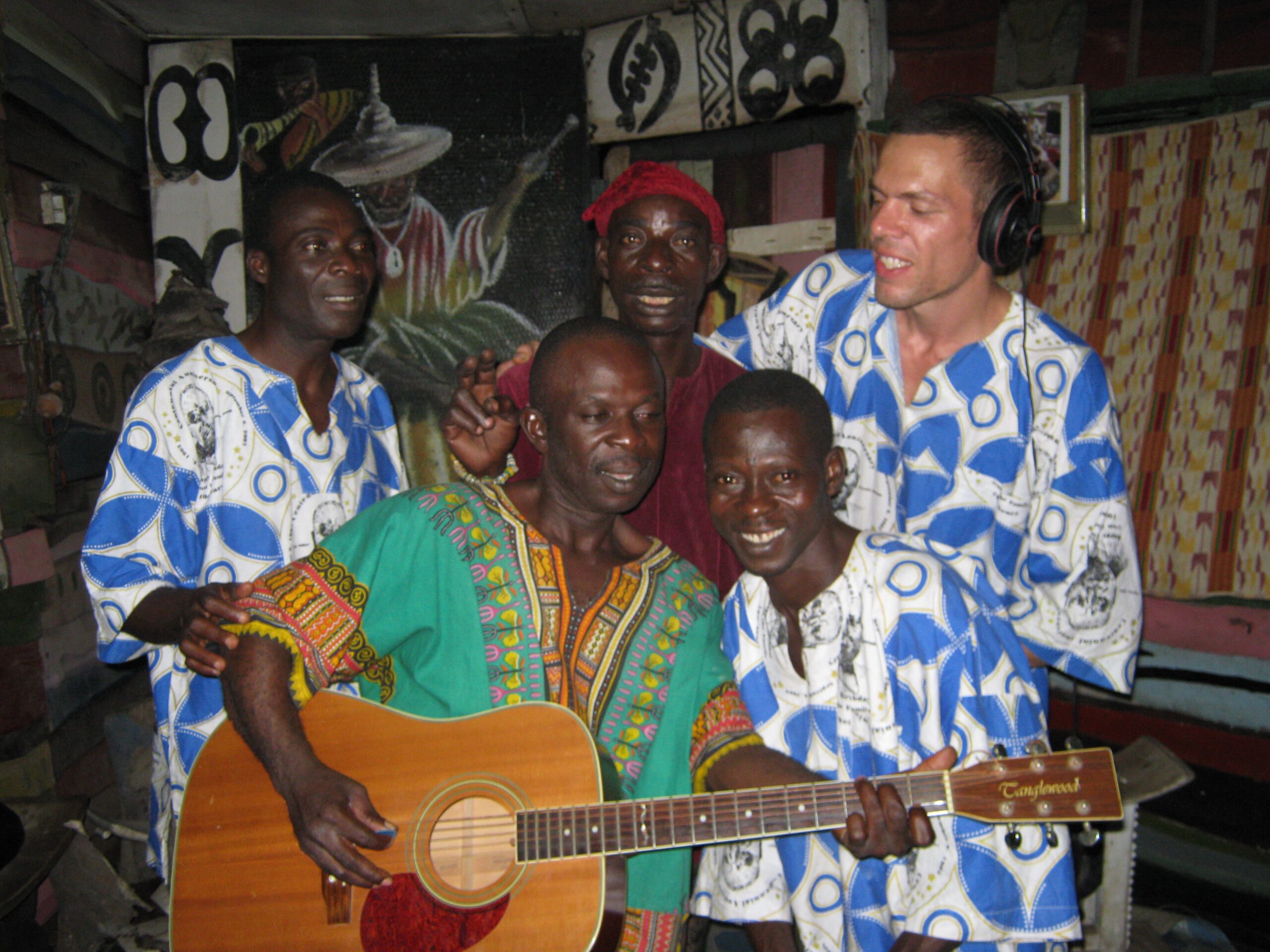
The roots of Won Bee Ga, Ba! go back to the 1990s. During this period, two closely connected centres of art, traditional music, dance and community life developed at opposite ends of the coastline: the Ananse artists’ community, with its Art and Craft Workshop at the sacred Osikan Rocks in Jamestown, and the Kwaabuette School of African Music and Dance in Osu.
This stretch of coastline connects two very different sides of Accra: the historic neighbourhood of Jamestown, with its fishing harbour, narrow streets and long-established communities, and the modern district of Osu, with its government buildings, embassies, shopping centres and bustling commercial areas.
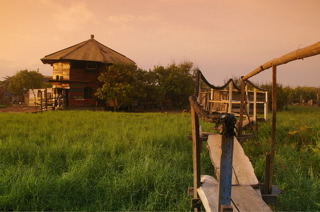
One of the leading figures in Jamestown’s early artistic community was Nii Kpakbo Adotey, also known as Tohojo. Together with Claas Wiechmann from Germany and other members of the Ananse group, he established the Ananse Art and Craft Workshop in the late 1990s, at the sacred Osikan Rocks behind the old walls of Jamestown. The neighbouring sandy bay, the first along the coast of Accra Central, became known within the community as Ananse Beach. Over the years, it developed into a vibrant place for art, traditional music, dance and community life.
At the other end of the coastline, Nii Adjarh Torto, a cousin of Nii Kpakbo Adotey, founded the Kwaabuette School of African Music and Dance in Osu. The two groups of artists and musicians maintained close ties over many years. These friendships, family connections and shared cultural activities developed into a lasting partnership, from which the German association Ankwa Roots e. V. later emerged.
Respect for nature and care for shared living spaces had always been part of community life. Back in the 1980s and 1990s, the beach was still a largely clean and beautiful place where people gathered to make music, dance and spend time together. Over the following decades, however, we witnessed first-hand how the waste problem grew increasingly severe, gradually transforming what had once been a clean beach into a heavily polluted environment.
From an early stage, artists and musicians from the Ananse community began regularly clearing waste from their beach. What started as a shared responsibility for this special place gradually developed into a much broader commitment to environmental protection. It was from this long history, these personal connections and the shared determination to tackle the growing pollution problem that Won Bee Ga, Ba! eventually emerged.
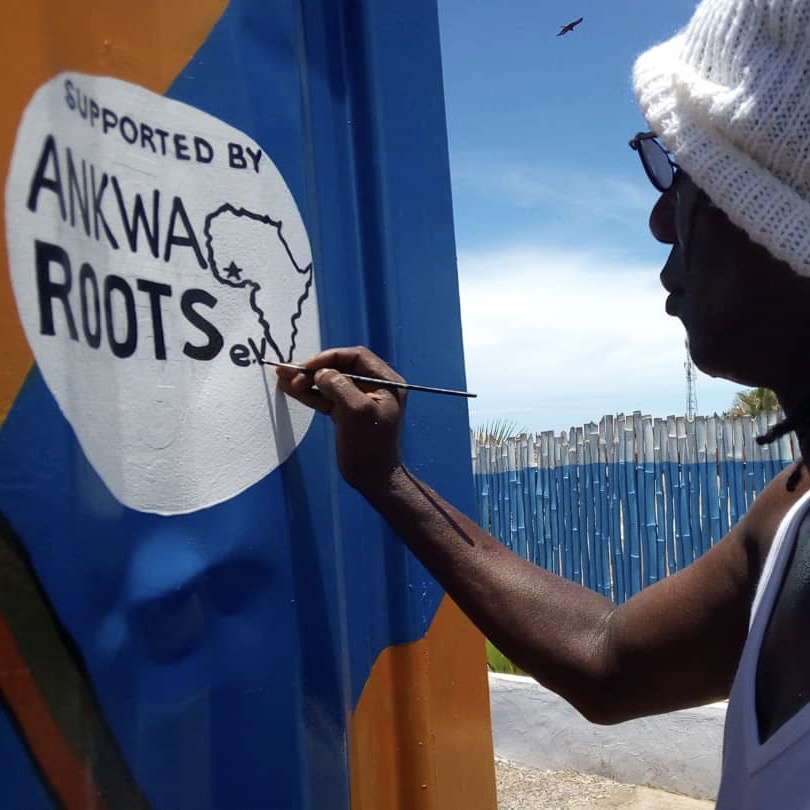
Ananse Beach remains at the heart of our activities today. Our container serves as a Community Point, and every Sunday we gather here for our regular beach clean-ups.
Der Name „Won Bee Ga, Ba!“ bedeutet sinngemäß „Kommt, lasst uns Accra sauber machen“. Er wurde 2019 vom ghanaischen Recycling- und Abfallkünstler Ed-Franklin Gavua geprägt, einem langjährigen Freund und Wegbegleiter unserer Initiative.
The full story of these communities, the people who shaped them and their cultural and spiritual heritage is told in our dedicated section, “The Roots – Our Shared Roots”.